How Long Do Wasps Live Indoors? Lifespan Health Risks and Prevention Tips
A wasp can enter homes through open windows and small gaps while searching for food or shelter.
How Long Do Wasps Live Indoors
Finding a wasp inside your home can feel scary. Many people ask, how long do wasps live indoors and whether they can survive for days inside a house.
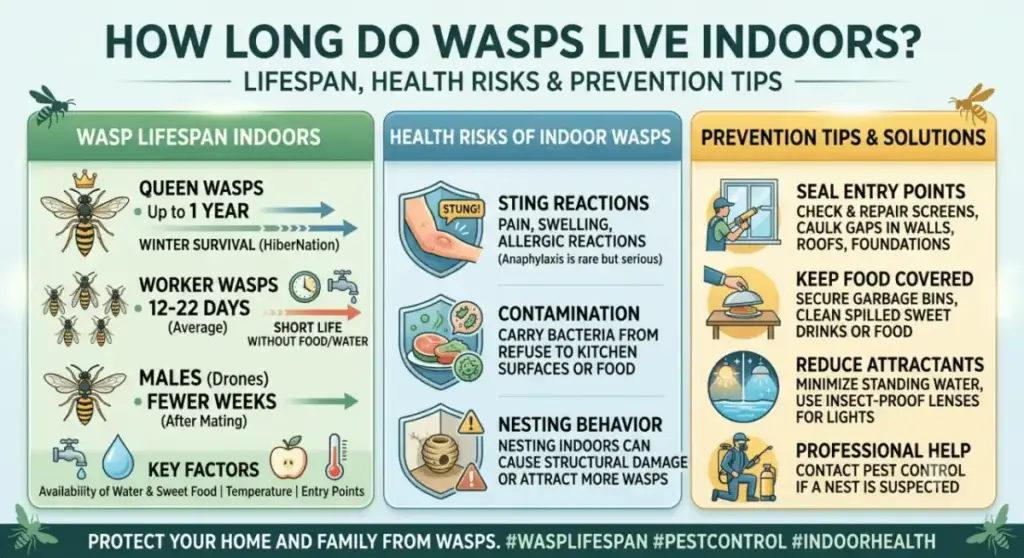
A wasp usually does not live very long indoors. Most indoor wasps survive from a few hours to several days. Their survival depends on food, water, temperature, and the type of wasp.
Wasps can enter homes through open windows, doors, cracks, and small gaps. Some wasps may stay inside because they look for warmth or a safe place. Others may enter by mistake and try to escape.
Understanding indoor wasp behavior helps you protect your home and avoid painful stings. This guide explains how long wasps live indoors, health risks, prevention methods.Demon Scratches
What Is a Wasp?
A wasp is a flying insect that belongs to the Hymenoptera group. Wasps share a close relationship with bees and ants as members of the same insect family group.
Unlike bees, most wasps have the ability to sting many times when they feel threatened. They use their sting for protection and hunting.
Common types of wasps include:
- Paper wasps
- Yellowjackets
- Hornets
- Mud daubers
Wasps help nature by controlling other insects. However, they can become a problem when they enter homes or build nests near people.
How Long Do Wasps Live Indoors?
Most wasps live indoors for a few hours to several days.
A single wasp trapped inside a house usually dies within 1–3 days because it cannot find enough food and water.
However, the survival time depends on different conditions.
| Condition | Effect on Wasp Lifespan |
|---|
| Access to water | Helps wasps survive longer |
| Warm temperature | Increases activity |
| Cold temperature | Shortens survival |
| Food sources | May extend lifespan |
| Hidden areas | Allows longer survival |
A wasp that finds moisture and food may survive longer than one trapped in an empty room.
Why Do Wasps Enter Homes?
Wasps usually enter homes for several reasons.
Searching for Food
Wasps look for sweet foods, fruits, sugary drinks, and other insects. Open food containers can attract them.
Looking for Shelter
During cooler months, some wasps search for warm places. Walls, attics, and garages can provide protection.
Accidental Entry
Many wasps simple fl inside through:
- Open windows
- Doors
- Small cracks
- Vent openings
They often struggle to find their way back outside.
Do Wasps Build Nests Indoors?
Yes, some wasps can build nests indoors if they find a safe location.
Common indoor nesting areas include:
- Roof spaces
- Attics
- Wall gaps
- Garages
- Storage areas
A single wasp inside does not always mean you have a nest. However, seeing many wasps may say a nearby colony.
A wasp nest can create a health risk because more insects may appear over time.
Are Indoor Wasps Dangerous?
Indoor wasps can be dangerous because they may sting when they feel threatened.
A wasp sting can cause:
- Pain
- Redness
- Swelling
- Itching
- Burning feeling
Most people recover from a wasp sting without serious problems.
However, some people can experience a severe allergic reaction.
Health Risks of Wasp Stings
A wasp sting may cause different reactions.
Mild Reaction
Common symptoms include:
- Small swelling
- Skin redness
- Mild pain
- Itching
These symptoms usually improve within a few hours or days.
Serious Allergic Reaction
Some people may develop an allergy called anaphylaxis.
Warning signs include:
- Trouble breathing
- Swelling of the face or throat
- Dizziness
- Fast heartbeat
- Feeling faint
A person with these symptoms needs urgent medical help.
How Long Can a Wasp Live Without Food?
A wasp can survive for a short time without food. Most indoor wasps may survive a few days if they have no access to food.
Water is more important for survival. A dry indoor environment can reduce their lifespan.
Temperature also affects survival. Cold conditions slow down wasp activity and can shorten their life.
Safe Ways to Remove a Wasp From Your House Without Getting Stung
Follow these simple steps:
1. Stay Calm
Do not hit or disturb the wasp. Sudden movements can make it defensive.
2. Open an Exit Route
Open windows and doors.
Turn off indoor lights and allow natural light outside to guide the wasp.
3. Keep Distance
Give the wasp space to leave.
4. Use a Glass and Paper Method
If the wasp sits on a surface:
- Place a glass over it.
- Slide paper underneath.
- Release it outside.
5. Call Pest Control for Nests
If you find a nest indoors, professional help is safer.
Common Mistakes When Dealing With Indoor Wasps
Many people make mistakes that increase the chance of stings.
Trying to Kill the Wasp Quick
Hitting a wasp can make it attack.
Blocking Its Exit
A trapped wasp becomes more stressed and defensive.
Ignoring a Wasp Nest
A nest can grow and create a bigger problem.
Using Unsafe Chemicals
Some sprays can harm people and pets if used incorrect.
Best Practices to Prevent Indoor Wasps
You can reduce wasp problems with simple steps.
Seal Home Entry Points
Check:
- Window gaps
- Door spaces
- Wall cracks
Seal openings to stop insects from entering.
Keep Food Covered
Store:
- Fruits
- Sweet drinks
- Food waste
in closed containers.
Clean Outdoor Areas
Remove:
- Fallen fruit
- Garbage
- Open food sources
These attract wasps.
Check Hidden Areas
Inspect:
- Roof corners
- Garages
- Sheds
for early signs of nests.
Indoor Wasp Lifespan Compared With Other Insects
| Insect | Average Indoor Survival |
| Wasp | Hours to several days |
| House fly | About 15–30 days |
| Mosquito | Several days to weeks |
| Ant | Weeks to months |
Wasps usually survive less time indoors because homes do not provide their natural .
Factors That Affect Wasp Survival Indoors
Several things influence how long a wasp stays alive inside.
Temperature
Warm areas help wasps stay active. Cold rooms reduce movement.
Water Availability
Moisture can help wasps survive longer.
Food Sources
Access to sugar or insects can increase survival.
Stress Level
A trapped wasp uses energy while searching for an exit.
Expert Tips for Home Safety
- Avoid touching wasps with bare hands.
- Teach children not to disturb flying insects.
- Wear protective clothing near nests.
- Remove food waste quick.
- Check outdoor areas regular.
Small prevention steps can reduce the chance of indoor wasp problems.
Future Trends in Indoor Pest Prevention
Modern pest control is becoming safer and smarter.
New approaches include:
- Eco-friend insect solutions
- Smart home pest monitoring
- Better sealing materials
- Natural insect prevention methods
Technology can help homeowners detect pest problems earlier.
FrequentlyAsked Questions
How long do wasps live indoors?
Most wasps live indoors for a few hours to several days. Their lifespan depends on food, water, and temperature.
Can a wasp survive inside a house overnight?
Yes, a wasp can survive overnight inside a house. It may stay hidden until it finds a way outside.
Do wasps die indoors natural?
Yes, most trapped wasps eventual die indoors because they cannot find enough resources.
Are wasps dangerous inside the house?
Yes, wasps can sting indoors, especially when they feel threatened.
Can wasps build nests inside walls?
Yes, some wasps can build nests inside wall spaces and hidden areas.
What attracts wasps inside homes?
Food smells, sweet drinks, fruits, warmth, and open entry points can attract wasps.
Should I kill a wasp inside my home?
It is safer to guide the wasp outside instead of attacking it.
How can I stop wasps from entering my house?
Seal cracks, cover food, clean waste areas, and check possible nesting spots.
Do wasps sleep at night?
Many wasps become less active at night and stay inside their nests.
When should I call pest control?
Call professionals if you find a nest or many wasps inside your home.
Conclusion
The answer to how long do wasps live indoors depends on their environment. Most indoor wasps survive from a few hours to a few days. They usually die because they cannot find enough food, water, or a suitable place to live.
A single wasp inside your home is not always a major problem. However, repeated sightings may point to a hidden nest. Safe removal methods, home cleaning, and prevention steps can reduce risks.
Protecting your home from wasps also protects your health. Simple actions like sealing gaps, covering food, and avoiding contact with wasps.
Key Takeaways
- Wasps usually survive indoors for hours to several days.
- Food, water, and temperature affect their lifespan.
- Indoor wasps can cause painful stings.
- Some people may have serious allergic reactions.
- Safe removal is better than attacking wasps.
- Preventing entry points helps reduce indoor wasp problems.