Can Gum Disease Kill You? Understanding the Health Risks
Can gum disease kill you? Severe untreated oral infections can become serious, but gum disease does not usually cause death by itself. The safest way to understand the risk is to separate common gum disease from rare, severe infections and avoid claims that gum disease directly causes heart attacks or other major diseases.
Gum disease is common and treatable. Early care can protect the gums, the bone around the teeth, and your overall quality of life.
What Is Gum Disease?
Gum disease is an infection and inflammation of the tissues around the teeth. It usually begins when plaque builds up along the gum line.
Gingivitis
Gingivitis is an early form of gum disease. The gums may become red, swollen, or bleed during brushing. With proper care and professional treatment when needed, gingivitis can often be reversed.
Periodontitis
Periodontitis is a more serious form of gum disease. It can damage the tissues and bone that support the teeth. Without treatment, it can lead to loose teeth and tooth loss.
Can Gum Disease Kill You?
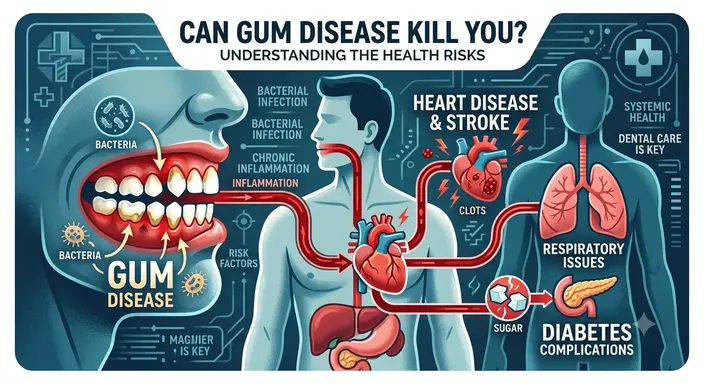
Gum disease itself rarely causes death. However, severe dental or gum infections can sometimes spread beyond the original area and require urgent medical care. The risk depends on the type and severity of the infection and the person’s overall health.
Research also finds associations between periodontal disease and several health conditions. An association does not prove that gum disease directly causes those conditions. Shared risk factors, such as smoking and diabetes, can affect both oral and general health.
Gum Disease and Heart Health
People with periodontal disease may have a higher risk of cardiovascular problems, but researchers continue to study the relationship. You should not treat gum disease as a proven direct cause of heart disease.
Good oral hygiene remains important. It reduces plaque, helps control gum inflammation, and protects your teeth.
Gum Disease and Diabetes
Diabetes and gum disease can affect each other. People with diabetes have a higher risk of gum problems, while serious gum inflammation can make blood sugar management harder for some people.
If you have diabetes, regular dental care and good blood glucose management can both support your health.
When a Dental Infection Becomes an Emergency
Seek urgent medical or dental care if you have signs of a serious infection, such as:
- Rapidly increasing facial or mouth swelling
- Fever with a dental infection
- Difficulty breathing
- Difficulty swallowing
- Confusion or severe weakness
- Severe pain with swelling
Difficulty breathing or swallowing with facial or neck swelling can be an emergency. Contact local emergency services immediately.
Common Signs of Gum Disease
- Bleeding when you brush or clean between your teeth
- Red or swollen gums
- Persistent bad breath
- Gum recession
- Loose teeth
- Pain while chewing
- Changes in the way your teeth fit together
Do not ignore persistent gum bleeding or swelling. A dentist can identify the cause.
What Causes Gum Disease?
- Plaque buildup
- Tobacco use
- Diabetes
- Some medicines and medical conditions
- Family history and individual susceptibility
- Difficulty maintaining oral hygiene
How to Prevent Gum Disease
- Brush twice a day with fluoride toothpaste.
- Clean between your teeth daily with floss or another suitable interdental cleaner.
- Do not smoke or use tobacco. Tobacco increases the risk of gum disease and makes treatment harder.
- Keep dental appointments. Professional exams and cleanings can find problems early.
- Manage health conditions. If you have diabetes, follow your healthcare team’s treatment plan.
How Dentists Treat Gum Disease
Treatment depends on the stage and severity. A dentist or dental hygienist may provide professional cleaning. More advanced periodontitis may require scaling and root planing or treatment from a periodontist. Severe cases may need additional procedures.
Antibiotics are not appropriate for every case. A dental professional decides whether they are needed.
Gum Health at a Glance
| Condition | Common features | Typical next step |
|---|---|---|
| Healthy gums | Firm, comfortable gums with little or no bleeding | Continue daily care |
| Gingivitis | Redness, swelling, bleeding | Improve oral care and see a dental professional |
| Periodontitis | Gum recession, pockets, loose teeth or bone loss | Professional periodontal treatment |
| Severe dental infection | Swelling, fever, severe pain, or difficulty swallowing/breathing | Urgent dental or medical care |
Frequently Asked Questions
Can gum disease really kill you?
Gum disease rarely causes death by itself. Severe oral infections can become dangerous if they spread, so serious symptoms need prompt care.
Can gum disease spread to the blood?
Bacteria from the mouth can enter the bloodstream, especially when gums are inflamed. This does not mean that every case of gum disease causes a dangerous bloodstream infection.
Can gum disease affect the heart?
Studies have found an association between periodontal disease and cardiovascular disease. That does not prove that gum disease directly causes cardiovascular disease.
Can gum disease affect diabetes?
Yes. Diabetes increases the risk of gum disease, and serious gum inflammation can make blood glucose management more difficult.
Can early gum disease be reversed?
Gingivitis can often improve with effective daily plaque control and professional dental care when needed. Periodontitis requires professional treatment and cannot simply be reversed with brushing alone.
Are bleeding gums normal?
Regular bleeding is a sign of gum inflammation and deserves attention. Talk with a dentist if it continues.
When should I see a dentist?
See a dentist for persistent bleeding, swelling, bad breath, gum recession, tooth looseness, or pain. Seek urgent care for severe swelling, fever, or trouble breathing or swallowing.
Conclusion
Gum disease is common, but it should not be ignored. Early gum disease often responds well to better plaque control and professional care. Advanced disease can damage the structures that support your teeth, and a severe dental infection can become a medical emergency in rare cases.
Good daily oral hygiene, regular dental care, and timely treatment offer the best protection. This article provides general health information and does not replace an examination or diagnosis from a qualified dental or medical professional.