How to Remove Food from Teeth Safe Easy Tips for a Healthy Smile
Using dental floss helps remove trapped food particles between teeth and supports healthy gums.
Introduction How to Remove Food from Teeth
You just finished lunch and now something’s stuck between your teeth. Your tongue keeps poking at it. It’s annoying, and honestly, a little embarrassing if you’re out in public.
The good news? You almost never need anything fancy to fix it. A few household tools and a bit of patience will do the job.
Here’s what actually works, what to avoid, and why this happens in the first place.BrassSmile Meaning
Why Food Gets Stuck Between Your Teeth
Every mouth is a little different. Some people have wider gaps between their teeth, so food slides right through. Others have tighter spacing, which traps small bits like a net.
Braces, bridges, crowns, and other dental work create extra nooks for food to hide in too. And certain foods are just worse offenders than others.
Popcorn hulls, corn kernels, meat fibers, and leafy greens are the usual troublemakers. They’re small, they’re fibrous, and they wedge into tight spots without much effort.
Left alone, that trapped food doesn’t just sit there quietly. Bacteria feed on it, and that’s how you end up with bad breath, plaque, or worse, a cavity down the road.
The Safest Ways to Get Food Out
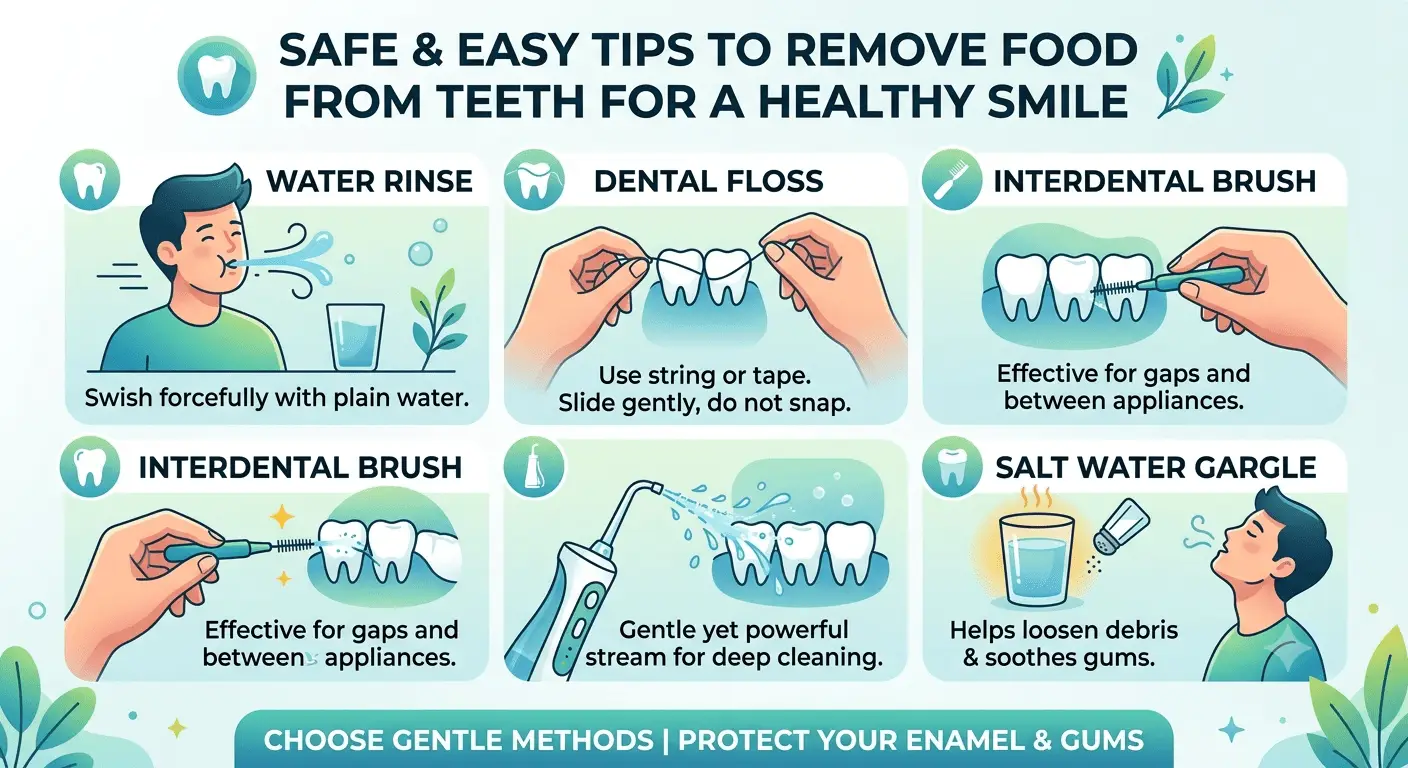
Reach for Floss First
Floss is still the best tool for this job, and it’s not close. It’s cheap, it’s gentle, and it gets into spaces your toothbrush simply can’t reach.
Break off around 18 inches. Wrap most of it around your middle fingers, leaving a couple inches to work with. Guide it between your teeth using a gentle back-and-forth motion, then curve it around each tooth in a C-shape and slide it up and down.
One thing people get wrong: don’t snap the floss down onto your gums. It stings, and if you do it often enough, you can actually cause your gums to recede.
Brush It Out
Sometimes the food isn’t wedged in tight. A regular brush with fluoride toothpaste can knock it loose, especially if you catch it soon after eating.
Angle your brush toward the gumline and use small circles rather than hard back-and-forth scrubbing. Spend about two minutes total and don’t skip the back teeth, they’re the ones people rush through.
Try an Interdental Brush
These tiny brushes look like miniature pipe cleaners, and they’re a lifesaver if you have braces, a bridge, or wider gaps between teeth.
You just slide the bristles in between your teeth and move them gently in and out. No snapping motion needed, so there’s less risk of hurting your gums than with floss if your technique is a bit rough.
Use a Water Flosser
A water flosser shoots a thin, steady stream of water between your teeth. It’s a great option if your gums are sensitive or if traditional floss feels awkward in your hands.
People with braces especially love these, since string floss can be a hassle to thread around brackets and wires.
Rinse With Warm Water
This sounds too simple to work, but it does. Take a mouthful of warm water and swish it around for 20 to 30 seconds. Loose bits of food often come free on their own.
It’s worth doing this right after meals, even when you don’t feel anything stuck. Prevention beats digging around later.
Try a Salt Water Rinse
Mix half a teaspoon of salt into a cup of warm water and swish it gently. This does double duty: it helps dislodge stubborn particles and soothes gums that feel a little irritated or sore.
Signs You Shouldn’t Ignore
Most stuck food clears up fast once you floss or rinse. But pay attention if you notice:
- A sharp or constant feeling of pressure between two teeth
- Pain when you bite down
- Gums that bleed easily or look swollen
- Breath that stays bad no matter how much you brush
If any of these stick around for more than a few days, it’s time to call your dentist. It could mean a cavity, gum disease, or something wedged in deeper than floss can reach.
What Not to Do
Don’t Dig With Pins or Sharp Objects
This one seems obvious, but people still do it out of frustration. A pin, needle, or fingernail can scratch your enamel or puncture your gums, and that opens the door to infection.
Go Easy on Wooden Toothpicks
Toothpicks aren’t off-limits, but they’re easy to overuse. Jabbing them in aggressively can bruise your gums or push food deeper instead of out. Use light pressure, and only when floss isn’t available.
Don’t Let It Sit There
It’s tempting to just ignore it and figure your saliva will handle it eventually. Sometimes it does. But bacteria start multiplying around trapped food within hours, not days, so it’s better to deal with it sooner.
Don’t Scrub Too Hard
Harder brushing doesn’t mean cleaner teeth. It just wears down enamel and irritates your gums over time. A soft-bristled brush with gentle pressure works better than a stiff one used aggressively.
Foods That Get Stuck Most Often
| Food | Why It Sticks |
|---|---|
| Popcorn | Hulls wedge into tight spaces |
| Meat | Fibers catch between teeth |
| Corn | Small kernels lodge easily |
| Spinach and other greens | Leaves cling to tooth surfaces |
| Nuts | Break into tiny sharp bits |
| Seeds | Small enough to slip into gaps |
| Sticky candy | Clings and doesn’t rinse away easily |
Daily Habits That Keep Food From Sticking
A little consistency goes a long way here.
- Brush twice a day with fluoride toothpaste
- Floss once a day, ideally at night
- Drink water throughout the day, especially after meals
- Snack on crunchy foods like apples or carrots, which naturally help clean teeth
- Swap your toothbrush out every three months
- See your dentist twice a year for a checkup and cleaning
None of this takes much time. It’s the kind of small habit that pays off years later when you’re not dealing with fillings or gum problems.
A Quick Example
Say you’re at the movies and grab a big bag of popcorn. Halfway through, a hull gets stuck between your back molars. It’s uncomfortable, but you don’t reach for a pin.
Instead, you pull out floss when you get home, work it gently between the teeth, and the hull comes right out. No bleeding, no soreness. Just a clean mouth again.
That’s really all this comes down to: use the right tool, go slow, and don’t force anything.
Frequently Asked Questions
What’s the safest way to remove food from teeth? Dental floss is your best bet in most cases. It’s gentle and gets into tight spaces without damaging your gums.
Can brushing alone get rid of stuck food? Sometimes, especially if the food is loosely wedged. But for tighter spots, floss or an interdental brush works better.
Is it okay to use a pin? No. Pins and needles can scratch your enamel and hurt your gums. Stick to floss or a proper dental tool.
Are water flossers actually effective? Yes. They’re gentle, effective, and especially helpful if you wear braces or have sensitive gums.
Why does food seem to get stuck in my teeth more than other people’s? It usually comes down to your tooth spacing, alignment, or dental work like crowns and bridges.
Can trapped food cause bad breath? Yes. Bacteria break down the food particles and release odor as a byproduct.
How often should I floss? Once a day is the general recommendation, ideally at night before bed.
When should I actually see a dentist about this? If food gets stuck constantly, or if you notice pain, swelling, or bleeding gums, book an appointment.
Does mouthwash get rid of stuck food? Not usually. It freshens your breath, but it won’t dislodge food that’s wedged between your teeth.
Can kids floss on their own? Younger kids usually need help from a parent until they build the coordination to do it safely themselves.
The Bottom Line
Getting food out from between your teeth isn’t complicated. Floss, a soft-bristled brush, an interdental brush, and a water flosser will handle almost every situation safely.
Skip the pins and sharp objects, they cause more harm than good. Stick to a daily routine of brushing and flossing, drink enough water, and see your dentist regularly.
Small habits like these are what actually protect your smile long term, not last-minute fixes.