How Much Does One Cubic Foot of Dirt Weigh? Complete Guide
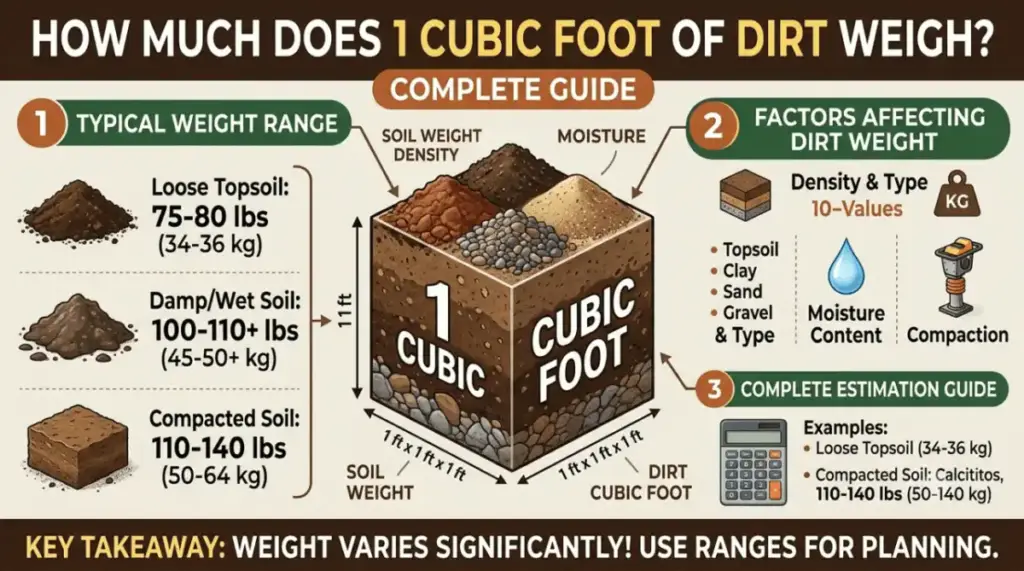
A cubic foot of dirt can have different weights depending on soil type, density, and moisture level.
Introduction How Much Does One Cubic Foot of Dirt Weigh?
A common question among homeowners and gardeners is, “What is the weight of one cubic foot of dirt? ”This question helps homeowners, gardeners, builders, and landscapers plan their projects.
The weight of one cubic foot of dirt usually depends on the type of soil, moisture level, and density. In general, one cubic foot of dirt weighs around 74 to 110 pounds.
Dry soil usually weighs less because it has less water. Wet soil becomes heavier because water adds extra weight. Different types of dirt, such as clay, sand, and topsoil, also have different weights.
Knowing the weight of dirt helps people buy the right amount of soil, transport materials safe, a.
This guide explains everything about one cubic foot of dirt weight, soil types.Alma Mater High School
What Is One Cubic Foot of Dirt?
A cubic foot of dirt means a space that measures:
- 1 foot long
- 1 foot wide
- 1 foot high
It shows the amount of soil inside that space.
A cubic foot is a common measurement used in gardening, landscaping, and construction. People use it to measure soil, mulch, gravel, sand, and other materials.
The weight of one cubic foot of dirt changes because soil is not always the same. Some soil contains more rocks, sand, clay, or water.
Quick Answer Box
One cubic foot of dirt weighs about 74 to 110 pounds.
Average weights:
| Dirt Type | Weight Per Cubic Foot |
|---|---|
| Dry soil | 74–90 pounds |
| Moist soil | 90–110 pounds |
| Heavy clay soil | 100–120 pounds |
| Sandy soil | 80–100 pounds |
| Topsoil | 80–110 pounds |
Why Does Dirt Weight Matter?
Understanding dirt weight helps in many real-life situations.
Gardening Projects
Gardeners need soil weight when buying soil bags or filling garden beds.
For example:
- Raised garden beds need a specific amount of soil.
- Heavy soil can affect plant growth.
- Light soil may need extra nutrients.
Knowing the weight helps gardeners choose the right soil type.
Landscaping Work
Landscapers move large amounts of dirt every day.
They use soil weight to:
- Estimate transportation needs
- Choose proper equipment
- Plan project costs
- Avoid overloading trucks
A small mistake in weight calculation can create extra expenses.
Construction Projects
Builders also need accurate soil measurements.
Dirt weight affects:
- Foundation planning
- Excavation work
- Land preparation
- Soil filling projects
Engineers check soil density before major construction work.
How Much Does One Cubic Foot of Dirt Weigh?
The average weight of one cubic foot of dirt is about 90 pounds.
However, the exact weight depends on several factors.Cubic Foot of Dirt Weigh?
Soil Type
Different soils have different densities.
Clay Soil
Clay soil contains very small particles.Cubic Foot of Dirt Weigh?
Average weight:
100–120 pounds per cubic foot
Sandy Soil
Sand contains bigger particles that allow water to pass through easy and improve .
Average weight:Cubic Foot of Dirt Weigh?
80–100 pounds per cubic foot
Topsoil
Topsoil contains minerals and organic material. Gardeners often use it for planting.
Average weight:
80–110 pounds per cubic foot
Compost Soil
Compost is lighter because it contains organic materials.
Average weight:Cubic Foot of Dirt Weigh?
40–60 pounds per cubic foot
Factors That Change Dirt Weight
Several things can change how much one cubic foot of dirt weighs.
1. Moisture Content
Water increases soil weight.Cubic Foot of Dirt Weigh?
Moist soil is often much heavier than dry soil because it contains extra water weight.
Example:
- Dry soil: 75–90 pounds
- Wet soil: 100+ pounds
2. Soil Density
Dense soil contains more material in the same space.
Clay soil has high density, so it weighs more.
Loose garden soil weighs less.Cubic Foot of Dirt Weigh?
3. Organic Material
Soil with compost, leaves, and plant material becomes lighter.
Organic soil improves plant growth but reduces weight.
4. Rocks and Gravel
Soil with rocks becomes heavier.
Construction dirt often contains stones, which increase total weight.
How to Calculate Dirt Weight
You can calculate dirt weight with a simple formula:
Weight = Volume × Density
For one cubic foot:
- Volume = 1 cubic foot
- Density = soil weight per cubic foot
Example:
If soil density is 90 pounds per cubic foot:
A single cubic foot of soil weighing 90 pounds results in a total weight of 90 pounds.
So, that dirt weighs about 90 pounds.
Common Uses of One Cubic Foot of Dirt
One cubic foot of dirt can be useful for many projects.
Small Gardening Jobs
People use one cubic foot of soil for:
- Flower pots
- Small garden beds
- Plant containers
- Lawn repair
Home Improvement
Homeowners use dirt for:
- Filling holes
- Leveling ground
- Improving lawns
- Creating planting areas
Professional Projects
Workers use soil measurements for:
- Landscaping
- Farming
- Road work
- Construction
Types of Dirt and Their Weight Differences
Different types of dirt have different weights. Soil weight changes because each type contains different materials, moisture, and density.
Clay Soil
Clay soil contains very small particles. It holds water for a long time, which makes it heavier.
Average weight: 100–120 pounds per cubic foot
Clay soil works well for some plants, but it can become hard when dry. It also becomes sticky when wet.
Sandy Soil
Sandy soil contains larger particles. It allows water to move quick through the ground.
Average weight: 80–100 pounds per cubic foot
Gardeners often mix sand with other soil types to improve drainage.
Topsoil
Topsoil forms the top layer of the ground and provides the main area where plants develop and grow. It contains minerals and organic materials.
Average weight: 80–110 pounds per cubic foot
People use topsoil for lawns, gardens, and landscaping projects.
Fill Dirt
Fill dirt is common used in construction projects. It helps level land and fill empty spaces.
Average weight: 90–120 pounds per cubic foot
Fill dirt typical has fewer organic materials and a denser, more tight packed .
Comparison Table: Dirt Weight Per Cubic Foot
| Type of Dirt | Average Weight |
|---|---|
| Dry dirt | 74–90 pounds |
| Wet dirt | 90–120 pounds |
| Clay soil | 100–120 pounds |
| Sandy soil | 80–100 pounds |
| Topsoil | 80–110 pounds |
| Compost soil | 40–60 pounds |
How Much Dirt Fits in One Yard? Understanding Cubic Feet Measurements
Many people buy soil by the cubic yard instead of cubic feet.
One cubic yard equals:
27 cubic feet
If one cubic foot of dirt weighs around 90 pounds:
90 × 27 = 2,430 pounds
So, one cubic yard of dirt can weigh about:
2,000 to 3,000 pounds
The total weight can vary based on the soil type and the amount of moisture it contains
Real Examples
Example 1: Garden Bed
A small garden bed needs 10 cubic feet of soil.
If each cubic foot weighs 90 pounds:
10 × 90 = 900 pounds
The total soil weight is about 900 pounds.
Example 2: Landscaping Project
A landscaping project needs 2 cubic yards of topsoil.
2 cubic yards = 54 cubic feet
54 × 90 = 4,860 pounds
The soil may weigh around 4,800 pounds.
Common Mistakes
Many people make mistakes when estimating soil weight.
Ignoring Moisture
Damp soil is usually heavier than dry dirt because the added water increases its weight.
Always consider recent rain or watering before moving soil.
Using the Wrong Soil Type
Not all dirt has the same weight.
Using a general estimate for heavy clay or rocky soil can create inaccurate results.
Forgetting Volume Measurements
People sometimes confuse cubic feet with cubic yards.
Remember:
- 1 cubic yard = 27 cubic feet
- 1 cubic foot = a small box of soil measuring one foot on each side
Best Practices
Follow these tips when working with soil:
- Check the soil type before buying.
- Measure the area correct.
- Consider moisture levels.
- Use proper tools for heavy soil.
- Avoid overloading vehicles.
These steps help save time, money, and effort.
Expert Tips
Experts recommend checking soil details before purchasing.
Look for:
- Soil density information
- Moisture level
- Organic content
- Delivery weight limits
Garden centers and suppliers can provide accurate soil information.
Future Trends
New technologies are making soil measurement methods faster, easier, and more accurate.
New tools help with:
- Digital soil testing
- Smart farming
- Better landscaping planning
- Accurate weight estimates
Farmers and builders now use technology to understand soil conditions faster.
FrequentlyAsked Questions
What Is the Weight of One Cubic Foot of Dirt?
One cubic foot of dirt usually weighs between 74 and 110 pounds. The weight depends on soil type, moisture, and density.
Does wet dirt weigh more than dry dirt?
Yes, wet dirt weighs more because water adds extra weight to the soil.
How much does one cubic foot of topsoil weigh?
One cubic foot of topsoil usually weighs around 80 to 110 pounds.
How much does one cubic foot of clay soil weigh?
Clay soil usually weighs about 100 to 120 pounds per cubic foot because it holds more water.
What Is the Weight of a Cubic Yard of Dirt?
A cubic yard of dirt usually weighs between 2,000 and 3,000 pounds.
How do I calculate dirt weight?
Multiply the soil volume by its density. The formula is:
Weight = Volume × Density
Is all dirt the same weight?
No. Dirt weight changes based on soil type, moisture, rocks, and organic materials.
How much does dry dirt weigh?
Dry dirt usually weighs about 74 to 90 pounds per cubic foot.
How much does garden soil weigh?
Garden soil usually weighs between 80 and 110 pounds per cubic foot.
Why is knowing dirt weight important?
Knowing dirt weight helps people plan gardening, landscaping, and construction projects correct.
Conclusion
Knowing how much one cubic foot of dirt weighs helps homeowners, gardeners, and builde. In most cases, one cubic foot of dirt weighs around 74 to 110 pounds.
The exact weight changes because of soil type, moisture, and density. Clay soil usually weighs more, while sandy and organic soil often weighs less.
Before buying or moving dirt, always check the soil type and calculate the amount needed. Accurate measurements help reduce waste, control costs, and complete projects safe.