Why Are My Teeth Yellow When I Brush Them Everyday?Causes and Solutions
It can be frustrating to brush every day and still notice yellow teeth. The good news is that a yellow or cream-colored shade does not always mean poor hygiene. Natural tooth color varies, and dentin under the enamel has a naturally warmer color.
Brushing removes plaque and food debris, but it cannot remove every type of discoloration. Surface stains, tartar, enamel changes, aging, and some dental conditions can also affect tooth color.
Why Are My Teeth Yellow When I Brush Them Every Day?
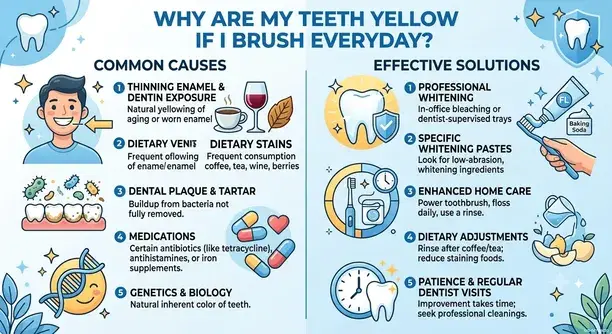
Daily brushing helps keep teeth clean, but it does not make every person’s teeth naturally white. Common reasons for a yellow appearance include:
- Natural tooth color
- Surface stains from foods and drinks
- Plaque or tartar buildup
- Enamel wear
- Age-related changes
- Tobacco use
- Certain medicines or childhood exposures
Natural Tooth Color Can Look Yellow
Enamel is partly translucent. Dentin, the layer underneath it, has a naturally yellowish color. If your enamel is thinner or more translucent, more of that underlying color can show through.
So, a light yellow or cream shade can occur in healthy teeth. Tooth color alone does not tell you whether your mouth is healthy.
Foods and Drinks Can Cause Surface Stains
Coffee, tea, cola, red wine, tobacco, and strongly colored foods can stain the outer surface of teeth. Brushing can help control some surface staining, but it may not remove established stains completely.
Rinsing with water after strongly colored or acidic drinks can help reduce contact with the teeth. Avoid brushing immediately after acidic foods or drinks because acid can temporarily soften enamel.
Plaque and Tartar Can Make Teeth Look Yellow
Plaque is a sticky bacterial film that forms on teeth. Daily brushing and cleaning between the teeth help control it. When plaque hardens into tartar, a toothbrush cannot remove it completely. A dental professional can remove tartar during a cleaning.
Enamel Wear Can Make Yellow Color More Visible
Enamel can wear down over time. Acid exposure, grinding, and aggressive brushing can contribute to enamel wear. As enamel becomes thinner, the natural color of dentin can become more noticeable.
Brushing harder does not solve this problem. Use a soft-bristled toothbrush and gentle pressure instead.
Other Reasons Teeth Can Change Color
Tooth color can also change because of aging, dental trauma, some medicines, or changes inside a tooth. A single tooth that suddenly becomes dark deserves a dental examination, especially if you also have pain or sensitivity.
How to Improve Tooth Appearance Safely
- Brush twice a day. Use fluoride toothpaste and a soft-bristled toothbrush.
- Clean between your teeth. Use floss or another interdental cleaner that works for you.
- Keep regular dental visits. Professional cleaning can remove tartar and some external stains.
- Limit tobacco exposure. Tobacco can stain teeth and harms oral health.
- Drink water. Water helps rinse the mouth after meals and drinks.
- Ask a dentist about whitening. Professional advice is useful before whitening, especially when you have sensitivity, cavities, gum disease, or restorations.
What Whitening Toothpaste Can and Cannot Do
Whitening toothpaste can help remove some surface stains. It does not usually change the natural color of teeth or remove every type of deep discoloration.
Avoid harsh DIY whitening methods. Products or substances that are too abrasive or acidic can irritate the gums or damage tooth surfaces.
When Should You See a Dentist?
Arrange a dental checkup if you notice:
- A sudden change in tooth color
- One tooth becoming much darker than the others
- Tooth pain or sensitivity
- Bleeding or swollen gums
- Heavy deposits near the gum line
- A broken or chipped tooth
Yellow Teeth: Common Causes at a Glance
| Possible cause | What it can do | What may help |
|---|---|---|
| Natural dentin color | Creates a warm or yellow tone | Routine oral care; whitening advice if desired |
| Coffee or tea | Creates surface stains | Rinse with water; professional cleaning if needed |
| Tartar | Creates yellow or brown deposits | Professional dental cleaning |
| Enamel wear | Makes dentin more visible | Gentle brushing and dental care |
| Tobacco | Can cause persistent staining | Stopping tobacco and getting dental care |
Frequently Asked Questions
Why are my teeth yellow even though I brush every day?
Brushing removes plaque and debris but does not remove every stain or change natural tooth color. Dentin, tartar, food and drink stains, enamel wear, and other factors can affect color.
Are yellow teeth always unhealthy?
No. Healthy teeth can have a naturally cream or yellow tone because dentin has a yellowish color.
Can brushing make yellow teeth white?
Brushing helps keep teeth clean and can remove some surface buildup. It does not guarantee a white tooth color.
Does coffee stain teeth?
Yes. Coffee can contribute to surface staining over time.
Can tartar make teeth look yellow?
Yes. Tartar can appear yellow or brown, especially near the gum line. A dental professional can remove it.
Can whitening toothpaste remove deep stains?
It mainly targets surface stains. A dentist can explain whether another whitening method suits your teeth.
Is it safe to whiten teeth at home?
Some regulated home whitening products can be used safely when you follow their directions. Ask a dentist first if you have dental disease, sensitivity, or restorations.
Conclusion
If your teeth look yellow even though you brush every day, do not assume that you are doing something wrong. Natural tooth color, surface stains, tartar, enamel changes, aging, and other factors can all affect appearance.
Keep brushing twice a day, clean between your teeth, avoid tobacco, and keep regular dental visits. If the color changes suddenly or you have pain or sensitivity, ask a dentist to check the cause.