What Is an EDC Knife? Complete Guide for Beginners
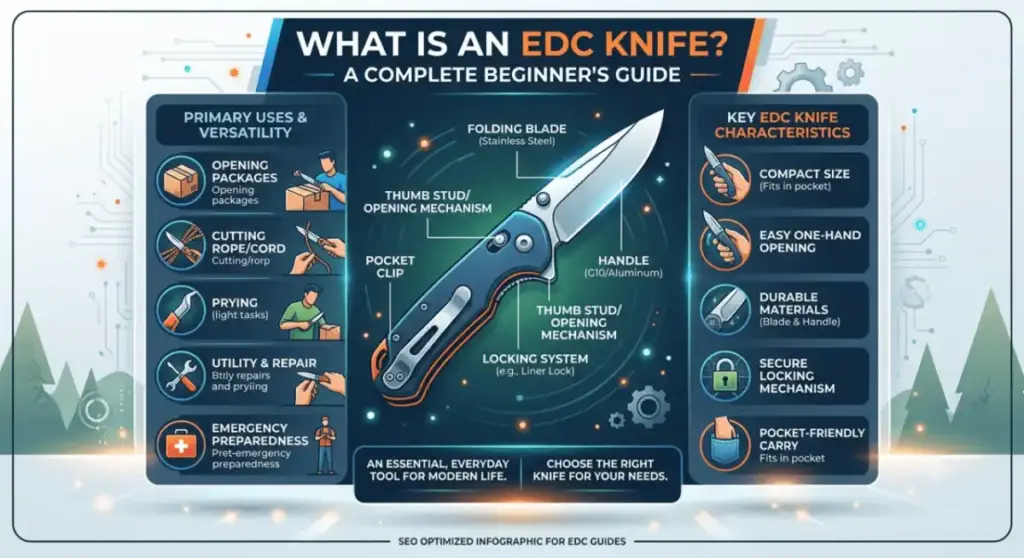
An EDC knife is a small everyday carry tool designed for common cutting tasks.
Introduction What Is an EDC Knife?
If you’ve ever seen someone pull a small folding knife out of their pocket to open a box or cut a piece of string, you’ve seen an EDC knife in action. It’s one of those tools you don’t think about much until you need one and don’t have it.
Let’s break down what an EDC knife actually is, why so many people carry one, and how to pick a good one without overspending.My CarTrade
What Does EDC Mean?
EDC stands for Everyday Carry. It’s a term for the small set of items people keep on them all day, every day. Think wallet, keys, phone, and often a small knife.
An EDC knife is just the knife version of that idea. It’s small, it’s practical, and it’s built to handle the little jobs that pop up during a normal day.
What Is an EDC Knife, Exactly?
An EDC knife is a compact knife you carry daily for everyday tasks. Most are folding knives, so the blade tucks safely into the handle when you’re not using it.
You’ll usually find these features on a solid EDC knife:
- A sharp, short blade
- A handle that’s comfortable to hold
- A pocket clip for easy carry
- A folding design for safety
The whole point is convenience. You want a knife that’s ready the second you need it, without weighing down your pocket or bag.
Why Do People Bother Carrying One?
Because life throws small cutting jobs at you constantly. A knife saves you from wrestling with packaging, chewing through tape with your teeth, or hunting down scissors that never seem to be where you left them.
Here’s where an EDC knife actually gets used:
- Opening mail and packages
- Cutting tape, zip ties, or rope
- Prepping food on a camping trip
- Trimming loose threads or labels
- Handling quick fixes at work or at home
None of these tasks are dramatic. That’s the point. An EDC knife earns its keep through small, boring, constant use.
How Does an EDC Knife Actually Work?
Most EDC knives fold. The blade sits inside the handle until you open it, then locks in place so it won’t snap shut on your fingers while you’re cutting.
When you’re done, you fold the blade back in and drop the knife in your pocket. Simple as that.
That folding, locking design is what makes these knives safe to carry around all day. You’re not walking around with an exposed blade, and you’re not worried about it closing on you mid-cut.
Why an EDC Knife Is Worth Having
It’s easy to carry. Most EDC knives are light and small enough that you forget they’re even in your pocket.
It handles daily tasks. From boxes to bags to zip ties, it’s the tool you reach for without thinking.
It saves time. Digging through a drawer for scissors takes longer than pulling a knife from your pocket.
It lasts. A decent EDC knife, taken care of, can last for years without needing to be replaced.
It does more than one job. One knife can replace a box cutter, a pair of scissors, and a rope cutter.
What to Look For: Key Features
Blade Steel
The steel your blade is made from decides how sharp it stays and how much upkeep it needs.
Common options include:
- Stainless steel — resists rust, easy to maintain
- Carbon steel — holds an edge well, needs more care
- Tool steel — tough and durable, often pricier
For most beginners, stainless steel is the easiest choice. It’s forgiving if you forget to clean it right away.
Blade Shape
The shape of the blade changes what it’s good at.
- Drop point — great all-around shape, strong tip
- Clip point — thinner tip, good for detail work
- Tanto — strong tip, built for tougher cutting
- Spear point — symmetrical, works well for piercing
If you’re not sure what you need, a drop point blade is a safe bet. It handles most everyday tasks without issue.
Handle Material
You’ll be holding this thing a lot, so comfort matters.
Common handle materials include G10, aluminum, titanium, wood, and plastic. G10 and aluminum tend to offer a good mix of grip and durability without costing a fortune.
Locking Mechanism
The lock is what keeps the blade open while you’re using it. A weak lock is a safety risk.
Popular lock types include:
- Liner lock
- Frame lock
- Button lock
- Back lock
Frame locks and liner locks are common on budget-friendly knives and work well for everyday use.
Pocket Clip
A pocket clip lets you clip the knife to your pocket, bag, or waistband instead of letting it rattle around loose. It’s a small feature, but it makes a real difference in day-to-day carry.
Types of EDC Knives
Folding Knives
The most common type by far. The blade folds into the handle, which makes it compact and easy to carry.
Fixed Blade Knives
The blade doesn’t fold, which makes these knives stronger overall. They’re bulkier to carry, so they’re less common as a daily pocket knife.
Multi-Tool Knives
These pack extra tools into one unit, like a screwdriver, scissors, or bottle opener alongside the blade. Great if you want one tool that does several jobs.
Automatic Knives
These open fast with the push of a button. Handy, but laws around owning one vary a lot depending on where you live, so check before you buy.
How to Choose Your First EDC Knife
Step 1: Think about what you’ll actually use it for. Office tasks and hiking trips call for different knives.
Step 2: Pick a blade size that fits your life. A shorter blade, usually under 3.5 inches, works for most people and stays within legal limits in more places.
Step 3: Decide on blade steel. Stainless steel is a solid, low-maintenance starting point.
Step 4: Hold the handle before you commit. Comfort matters more than looks once you’re using it every day.
Step 5: Check your local knife laws. Blade length limits and knife types allowed can vary a lot by city and state.
Step 6: Set a budget and stick close to it. You don’t need to spend a fortune to get a knife that performs well.
Mistakes Beginners Make
| Mistake | Why It Hurts |
|---|---|
| Buying a huge blade | Hard to carry, often illegal in some areas |
| Skipping local law research | Can lead to legal trouble |
| Choosing cheap steel | Dulls fast, needs constant sharpening |
| Never maintaining the knife | Shortens its lifespan |
| Buying based on looks alone | Poor real-world performance |
Best Practices for Owning an EDC Knife
- Wipe the blade clean after use
- Sharpen it before it gets truly dull, not after
- Store it somewhere dry
- Know your local knife laws
- Check the lock regularly for wear
- Use the knife for its intended job, not as a pry bar
A Few Expert Tips
Buy the best quality you can afford rather than the biggest blade you can find. Stainless steel is the easiest steel to live with day to day. Always hold a knife before buying it if you can, since comfort in your hand matters more than specs on paper. If this is your first knife, start with a simple folding design. And take a few minutes to learn proper cutting technique. It keeps your fingers safe.
A Few Well-Known EDC Knives
- Benchmade Bugout — light and easy to carry all day
- Spyderco Paramilitary 2 — well known for holding up over years of use
- Civivi Elementum — a favorite for people just starting out
- CRKT Drifter — budget-friendly and gets the job done
- Victorinox Swiss Army Knife — packs multiple tools into one
Who Actually Uses These Knives
Office workers use them mostly for opening packages and mail.
Delivery drivers rely on them to cut through tape and shipping materials all day long.
Campers use them for food prep and cutting rope or cordage.
DIY hobbyists grab them for quick repairs and small project tasks around the house.
Folding vs. Fixed Blade: Quick Comparison
| Feature | Folding Knife | Fixed Blade |
|---|---|---|
| Easy to carry | Excellent | Good |
| Strength | Good | Excellent |
| Safety | Very good | Good |
| Convenience | Excellent | Good |
| Best for daily use | Excellent | Moderate |
Where the EDC World Is Headed
Knife makers keep pushing for better steel, lighter materials, and stronger locking systems. More brands are also paying attention to sustainable materials and manufacturing, which is a shift worth watching if you care about where your gear comes from.
Common Questions About EDC Knives
Is it legal to carry an EDC knife? Laws differ depending on where you live. Always check your local and state rules before carrying one in public.
What does EDC actually stand for? Everyday Carry.
Can I carry one every single day? Plenty of people do, but it still comes down to your local laws around blade length and knife type.
What’s the best EDC knife for a beginner? A simple folding knife with a locking blade is the safest, easiest place to start.
What size blade should I get? Most people do fine with something compact, usually under 3.5 inches.
Are EDC knives expensive? Not necessarily. You can find solid options at almost any budget, from under $30 up to premium models well over $200.
What steel holds up best? Stainless steel is the go-to for most people because it resists rust and needs less upkeep.
Can an EDC knife rust? Yes, especially if it’s carbon steel and doesn’t get cleaned or dried properly after use.
When should I sharpen mine? As soon as you notice it’s not cutting cleanly anymore. Don’t wait until it’s completely dull.
How is an EDC knife different from a survival knife? An EDC knife is built for small daily tasks. A survival knife is built for tougher outdoor and emergency situations.
Are folding knives actually safe? Yes, as long as the locking mechanism is solid and you check it now and then for wear.
Can I use an EDC knife while camping? Definitely. Plenty of campers use their everyday knife for cooking prep and cutting cordage on the trail.
The Bottom Line
An EDC knife is a small, practical tool that makes daily tasks a little easier. Most people land on a folding knife because it’s compact, safe, and simple to carry around.
When you’re shopping for one, pay attention to blade steel, handle comfort, and the locking mechanism. Skip the flashy options and focus on what will actually hold up to daily use.
A well-made EDC knife isn’t a big investment, but it’s one you’ll reach for constantly once you have it.
Quick Recap
- EDC stands for Everyday Carry
- An EDC knife is built for small daily tasks, not survival situations
- Folding knives are the most common and practical choice
- Blade steel and handle comfort matter more than looks
- Regular cleaning and sharpening keep a knife working longer
- Always check your local knife laws before you buy or carry one