How Heavy Is a Railroad Tie? Complete Weight Guide
A wooden railroad tie helps support railway tracks and keeps the rail system stable.
Introduction How Heavy Is a Railroad Tie?
If you’ve ever tried to pick one up, you already know: a railroad tie is no joke. Whether you’re planning a landscaping project, hauling a few home from a salvage yard, or just curious how trains stay put on the rails, the weight of these things matters more than you’d think.
Here’s the short version. Then we’ll dig into the details.DEB Exams Mock Papers
The Quick Answer
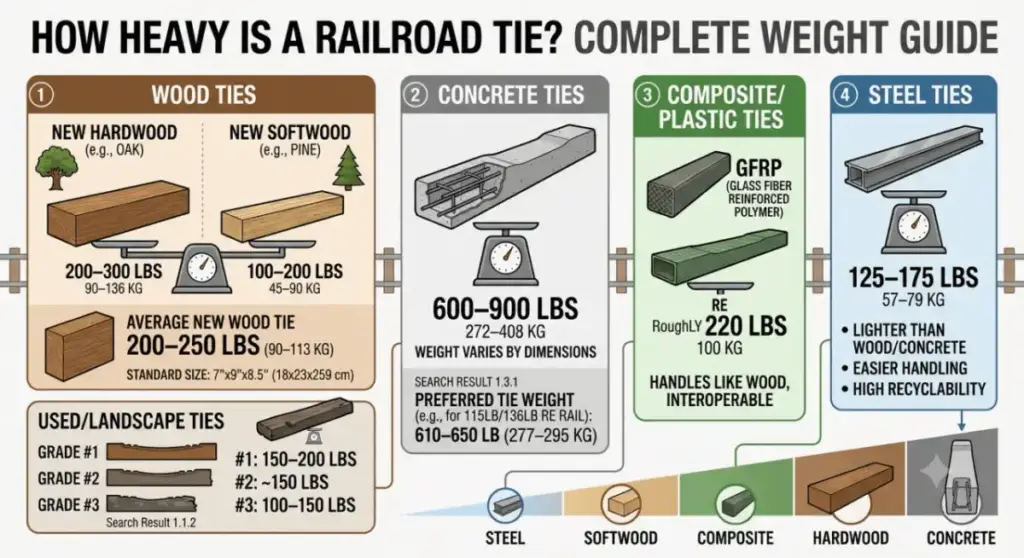
A standard wooden railroad tie weighs 180 to 250 pounds (about 82 to 113 kg).
A concrete tie is a different animal entirely — most run 600 to 800 pounds (272 to 363 kg).
Steel ties land somewhere in the middle, usually 200 to 400 pounds.
The exact number depends on the wood species, how wet the tie is, and how big it was cut. Let’s break that down.
What a Railroad Tie Actually Does
A railroad tie is the beam that sits under the rails and holds everything together. You might also hear it called a sleeper or a railway tie — same thing, different name depending on where you’re from.
Its job isn’t complicated, but it’s essential:
- Keeps the rails spaced correctly apart
- Spreads the weight of passing trains across the ground
- Keeps the whole track from shifting under load
Without ties, rails would drift out of position pretty fast. That’s why they’re built heavy and built to last.
Why the Weight Actually Matters
You might wonder why anyone cares about the exact poundage. Turns out, it affects almost every step of working with these things.
If you’re moving ties yourself, you need to know whether your truck or trailer can handle the load. If you’re a contractor, weight determines what equipment you bring to the job site. And if you’re just trying to avoid throwing your back out, knowing the number before you lift is the whole game.
Railroad Tie Weight by Type
Here’s how the main materials stack up against each other.
| Type | Average Weight |
|---|---|
| Wooden tie | 180–250 lbs |
| Hardwood tie | 200–300 lbs |
| Concrete tie | 600–800 lbs |
| Steel tie | 200–400 lbs |
Concrete wins the heavyweight title by a wide margin. Wood stays the most common choice across rail networks simply because it’s lighter and easier to handle.
Standard Size of a Railroad Tie
Most wooden ties follow roughly the same dimensions, no matter where they’re made.
| Measurement | Size |
|---|---|
| Length | 8.5 feet |
| Width | 9 inches |
| Thickness | 7 inches |
Bigger dimensions mean more weight, which sounds obvious, but it’s worth remembering when you’re comparing ties from different suppliers.
What Changes the Weight
A handful of things can push a tie’s weight up or down from the average.
The Material
This is the big one. Concrete is dense and heavy by nature. Steel comes in heavier than most wood too. Wood sits at the lighter end, but “light” is relative when you’re still talking about 200 pounds.
How Wet It Is
Wood soaks up water like a sponge over time. An old tie that’s been sitting outside for years can weigh noticeably more than a fresh one, just from moisture alone.
The Type of Wood
Not all trees are created equal. Oak and hickory run dense and heavy. Pine runs much lighter. If you’re buying used ties and don’t know the species, you’re really just guessing at the weight until you check.
Age
Older ties shift in weight over the years. Weather, moisture, and wear all play a part, and not always in the direction you’d expect.
Size
Longer or thicker ties simply carry more mass. It’s the simplest factor on this list, but easy to forget when you’re eyeballing a pile at a salvage yard.
Wooden Ties: The Most Common Choice
Wood remains the standard across most rail systems, and for good reason. A typical wooden tie runs 180 to 250 pounds, though dense hardwood versions can push past 300.
People like wood because:
- It costs less than concrete or steel
- It’s easier to handle on-site
- It flexes a bit instead of cracking under stress
- It holds up for years with basic maintenance
Why People Still Use Concrete
Concrete ties run 600 to 800 pounds, sometimes more depending on the design. That extra bulk comes with real advantages though. They last longer, need less upkeep, and hold their shape better under heavy or repeated loads. High-speed rail lines lean on concrete for exactly this reason.
Where Steel Fits In
Steel ties are the least common of the three, generally sitting at 200 to 400 pounds. Rail companies pick steel for specific environments where insects or extreme conditions would chew through wood over time.
Comparing the Three Side by Side
| Feature | Wood | Concrete | Steel |
|---|---|---|---|
| Weight | Lightest | Heaviest | Middle |
| Cost | Lower | Higher | Middle |
| Durability | Good | Excellent | Very good |
| Maintenance | Moderate | Low | Low |
| Typical use | Everyday rail lines | High-speed rail | Specialty projects |
How to Estimate a Tie’s Weight Yourself
If you’re staring at a pile of ties and need a rough number, here’s a simple way to work it out.
- Figure out the material. Wood, concrete, and steel all weigh differently, so this comes first.
- Measure it. Length, width, and thickness all factor into the final number.
- Check for moisture. A damp or waterlogged tie will weigh more than a dry one.
- Compare to the averages above. Once you know the material and size, you’re already close to the real weight.
Real Situations Where This Matters
Landscaping a Backyard
Say you buy five wooden ties for a retaining wall. At roughly 200 pounds each, that’s 1,000 pounds total. You’re not fitting that in the back of a sedan — you’ll want a trailer.
A Larger Rail Project
Now scale that up. A rail crew installing 1,000 concrete ties at 700 pounds each is moving 700,000 pounds of material. That’s why heavy machinery, not manual labor, handles jobs like this.
A Quick Story Worth Knowing
A landscaping contractor once figured his reclaimed wooden ties would weigh about 150 pounds each — a reasonable guess based on how they looked. Once he actually weighed them, they came in closer to 220 pounds apiece, thanks to years of soaked-up moisture.
His crew had to scramble for extra lifting equipment mid-job. It’s a small story, but it makes the point: never guess when you can check.
Mistakes Worth Avoiding
Assuming every tie weighs the same. Material changes everything. A wood tie and a concrete tie aren’t in the same weight class at all.
Ignoring moisture. Water adds real weight, especially to older wood.
Guessing at dimensions. Bad measurements lead to bad estimates, and bad estimates lead to underprepared moving days.
Lifting solo. These things are heavy enough to hurt you. Get a second set of hands or use equipment.
A Few Safety Basics
- Wear gloves and proper footwear
- Use a dolly, hand truck, or machinery instead of your back
- Measure before you commit to moving anything
- Confirm the material before you plan transport
- Store ties on flat, stable ground
None of this is complicated, but it’s the kind of thing people skip until they’ve already thrown out their back once.
Quick Numbers to Remember
- A mile of track can hold more than 3,000 ties
- Concrete ties generally outlast wooden ones by a wide margin
- Wood stays the most widely used material worldwide, even with concrete’s advantages
Where Rail Ties Might Be Headed
Rail companies keep experimenting with new materials. Composite ties made from recycled plastic and rubber are showing up more often. Some newer concrete designs aim to last even longer with less upkeep. There’s also growing interest in sensor-equipped ties that can flag wear before it becomes a real problem.
None of this replaces wood or concrete overnight, but it’s worth watching if you follow the rail industry.
Common Questions
How heavy is a railroad tie? A standard wooden tie weighs 180 to 250 pounds. Concrete ties run 600 to 800 pounds.
Do old railroad ties weigh more than new ones? Often, yes. Moisture builds up over the years and adds weight, even though the wood itself hasn’t changed.
Is concrete really that much heavier than wood? Yes — concrete ties typically weigh about three times what a wooden tie weighs.
Can I move a railroad tie by myself? It’s not a great idea. Even the lighter wooden ties are heavy enough to cause a back injury if you lift wrong.
How long is a standard tie? Around 8.5 feet, give or take, depending on the manufacturer.
Why are they made so heavy in the first place? They need enough mass and strength to hold a loaded train in place without shifting.
What kind of wood gets used most? Oak and hickory are common choices because they’re dense and durable.
What does a steel tie weigh? Usually between 200 and 400 pounds.
Does water really add that much weight? Yes, wood absorbs moisture over time, and it adds up more than people expect.
How many ties does a mile of track need? Typically more than 3,000, depending on spacing.
Are railroad ties safe to use for a garden or retaining wall? Plenty of people do it. Just check your local guidelines first, since some older ties were treated with chemicals that aren’t ideal for garden beds.
The Bottom Line
So, how heavy is a railroad tie? It really comes down to what it’s made of. Wood lands around 180 to 250 pounds. Concrete jumps up to 600 to 800 pounds. Steel sits in between.
Before you move one, figure out the material, check for moisture, and bring the right equipment. A little planning saves you a sore back and a wasted trip.
Quick recap:
- Wooden ties: 180–250 lbs
- Concrete ties: 600–800 lbs
- Steel ties: 200–400 lbs
- Moisture and age both push weight up
- Never lift or transport one without checking the weight first