Does Charcoal Expire? Health Safety and Storage Facts You Should Know
Does Charcoal Expire?
Many people ask, does charcoal expire? This is a common question for people who grill food, store charcoal at home, or use activated charchol.
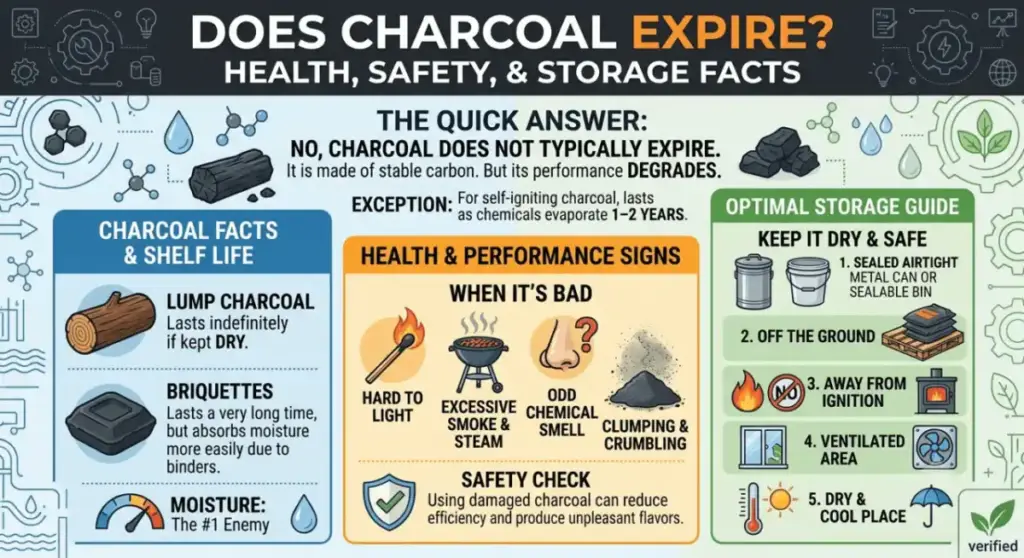
The simple answer is no. Charcoal does not expire like food. However, it can lose quality when moisture, mold, or poor storage affects it.
This matters for health and safety. Damaged charcoal can create extra smoke. Too much smoke may affect air quality and cause discomfort for some people.
This guide explains everything you need to know about charcoal shelf life, storage.How Many lbs of Crab Legs Per Person?
Quick Answer
Does Charcoal Expire?
No. Charcoal does not have a true end date.
If you keep charcoal dry, it can last for many years. Moisture causes most charcoal problems.
Featured Snippet Answer
Charcoal does not expire like food. Dry charcoal can remain usable for years. However, wet or moldy charcoal may not burn proper and can create more smoke, which may affect air quality .
What Is Charcoal?
Charcoal is a carbon-rich material made by heating wood with very little oxygen.
People use charcoal for:
- Cooking food
- Outdoor grilling
- Barbecues
- Heating
- Water filtration
- Activated charcoal products
The most common types include:
| Type | Main Use |
|---|---|
| Lump Charcoal | Grilling |
| Charcoal Briquettes | Barbecue cooking |
| Activated Charcoal | Health and filtration products |
| Hardwood Charcoal | Long cooking sessions |
Why Does Charcoal Matter for Health?
Many people think charcoal only relates to cooking. However, charcoal can also affect health and wellness.
When charcoal burns, it creates smoke and tiny particles. Dry charcoal usually burns cleaner. Wet charcoal often produces more smoke.
Heavy smoke exposure may:
- Irritate the eyes
- Cause coughing
- Irritate the throat
- Affect breathing comfort
People with asthma or respiratory conditions may notice these effects more.
How Does Charcoal Work?
Charcoal contains carbon.
When you light charcoal, carbon combines with oxygen and creates heat.
Dry charcoal:
- Lights faster
- Burns hotter
- Produces less unwanted smoke
Wet charcoal:
- Burns poor
- Produces extra smoke
- Creates less heat
This is why proper storage is important.
Does Charcoal Go Bad?
Charcoal rarely goes bad.
Instead, environmental conditions affect its quality.
The biggest problem is moisture.
Water can make charcoal:
- Hard to light
- Less effective
- More likely to crumble
- More likely to grow mold
Can Moisture Affect Health and Safety?
Yes.
Moisture can create conditions that allow mold growth.
Moldy charcoal may:
- Smell unpleasant
- Create extra smoke
- Reduce air quality
If charcoal shows visible mold, discard it.
Using clean and dry charcoal supports a healthier grilling environment.
Activated Charcoal and End Dates
Activated charcoal differs from regular grilling charcoal.
Manufacturers use activated charcoal in:
- Water filters
- Air filters
- Certain medical products
- Wellness products
Many activated charcoal products include end dates.
These dates help ensure:
- Product quality
- Product effectiveness
- Product safety
Always follow the manufacturer’s instructions for activated charcoal supplements and medical products.
Signs That Charcoal Should Not Be Use
Inspect charcoal before use.
Visible Mold
Mold growth indicates moisture damage.
Strong Musty Smell
A strange odor may signal contamination.
Excessive Moisture
Damp charcoal burns poor.
Severe Crumbling
Very damaged charcoal may not perform well.
Pest Contamination
Discard charcoal if pests enter the storage area.
Benefits of Proper Charcoal Storage
Good storage offers many advantages.
Better Air Quality
Dry charcoal often produces cleaner burns.
Improved Cooking Results
Food cooks more even.
Longer Shelf Life
Proper storage extends usability.
Reduced Waste
You throw away less charcoal.
Better Household Safety
Dry storage reduces moisture-related problems.
Types of Charcoal
Lump Charcoal
Natural wood charcoal.
Benefits:
- High heat
- Fast ignition
- Less ash
Charcoal Briquettes
Compressed charcoal pieces.
Benefits:
- Consistent burning
- Easy temperature control
Activated Charcoal
Special processed charcoal with tiny pores.
Common uses:
- Water purification
- Air filtration
- Certain health products
Step-by-Step Guide to Safe Charcoal Storage
Step 1: Keep Charcoal Dry
Store charcoal away from rain and moisture.
Step 2: Use Airtight Containers
Sealed containers block humidity.
Step 3: Choose a Cool Location
A garage or shed often works well.
Step 4: Keep It Off the Ground
Shelves help prevent moisture exposure.
Step 5: Inspect It Regular
Check for mold, water damage, and pests.
Common Mistakes
Many people reduce charcoal quality by making simple mistakes.
Leaving Charcoal Outside
Rain damages charcoal.
Ignoring Humidity
Humidity slow affects performance.
Storing Near Water Sources
Leaks can create moisture problems.
Using Torn Bags
Damaged packaging allows water inside.
Best Practices for Health and Safety
Follow these simple habits.
- Store charcoal in dry places.
- Use sealed containers.
- Avoid moldy charcoal.
- Keep grilling areas well ventilated.
- Reduce unnecessary smoke exposure.
- Follow product instructions.
These habits help support safer charcoal use.
Expert Tips
Health and safety experts recommend:
- Using charcoal outdoors whenever possible.
- Keeping children away from active grills.
- Avoiding inhalation of heavy smoke.
- Storing charcoal away from food supplies.
- Discarding charcoal with mold growth.
These practices support a safer environment.
Real-Life Example
A family stored charcoal in a waterproof container for three years.
The charcoal remained dry and easy to light.
Another family left charcoal outside during a rainy season.
Moisture entered the bag. The charcoal produced more smoke and became difficult to ignite.
The difference came from storage conditions rather than age.
Comparison Table: Dry vs Wet Charcoal
| Feature | Dry Charcoal | Wet Charcoal |
|---|---|---|
| Lighting Speed | Fast | Slow |
| Heat Output | Strong | Weak |
| Smoke Production | Lower | Higher |
| Air Quality Impact | Better | Worse |
| Storage Condition | Good | Poor |
Statistics and Data
Experts agree that charcoal itself does not spoil like food.
Research on fuel storage shows that moisture is the main factor affecting charcoal p.
Many manufacturers recommend:
- Dry storage
- Sealed containers
- Protection from humidity
These steps help preserve quality and support safer use.
Tools and Resources
Helpful storage tools include:
- Airtight bins
- Waterproof containers
- Garage shelving
- Moisture absorbers
- Storage cabinets
These tools help keep charcoal dry and usable.
Future Trends
The charcoal industry continues to improve.
Future developments may include:
- Eco-friend charcoal products
- Cleaner-burning charcoal
- Better moisture-resistant packaging
- Sustainable charcoal production
- Improved storage solutions
These trends may support healthier and safer charcoal use.
FrequentlyAsked Questions
1. Does charcoal expire over time?
No. Charcoal does not expire like food. If you keep it dry, it can remain usable for many years. Moisture is the main reason charcoal loses quality.
2. Can I use charcoal that is several years old?
Yes. Old charcoal often works well if it stays dry and free from mold. Check its condition before using it.
3. Is wet charcoal dangerous?
Wet charcoal is not usually dangerous, but it can create more smoke and burn poor. Excess smoke may irritate the eyes, nose, and throat.
4. How can I tell if charcoal has gone bad?
Look for mold, a musty smell, excessive moisture, or severe crumbling. These signs show that storage conditions affected the charcoal.
5. Does charcoal affect air quality?
Yes. Burning charcoal releases smoke and tiny particles into the air. Dry charcoal usually produces less smoke than wet charcoal.
6. Is activated charcoal the same as grilling charcoal?
No. Activated charcoal goes through special processing. Companies use it in filters, medical products, and some wellness products. Grilling charcoal is for cooking and heating.
7. Should people with asthma avoid charcoal smoke?
People with asthma or breathing conditions should limit exposure to heavy smoke. Good ventilation helps reduce discomfort.
8. What is the best place to store charcoal?
Store charcoal in a cool, dry place. Airtight containers provide extra protection against moisture.
9. Can mold grow on charcoal?
Yes. Mold can grow if charcoal becomes wet and stays in a damp environment for a long time.
10. How long do charcoal briquettes last?
Charcoal briquettes can last for many years when stored proper. Dry storage helps maintain their performance.
11. Does charcoal lose heat as it ages?
Age alone does not reduce heat output. Moisture and poor storage usually cause performance problems.
12. Can I store charcoal in my garage?
Yes. A dry garage is often one of the best places to store charcoal safe.
Conclusion
So, does charcoal expire? The answer is no. Charcoal does not expire like food, medicine, or other household products. In most cases, charcoal can remain useful for many years when stored correct.
The most important factor is moisture. Water, humidity, and poor storage conditions can reduce charcoal quality. Wet charcoal may become difficult to light, produce more smoke, and create a less enjoyable b. In some cases, moisture can even lead to mold growth.
From a health perspective, proper charcoal storage matters because it helps reduce. Dry charcoal burns more efficient and often produces cleaner results. People with asthma, allergies, or breathing concerns may especially enjoy reducing exposure.