Should I Brush My Teeth Before Using Whitening Strips? Expert Guide for Safe Teeth
Brushing your teeth before whitening strips helps remove plaque and food particles for more even whitening.
Should I Brush My Teeth
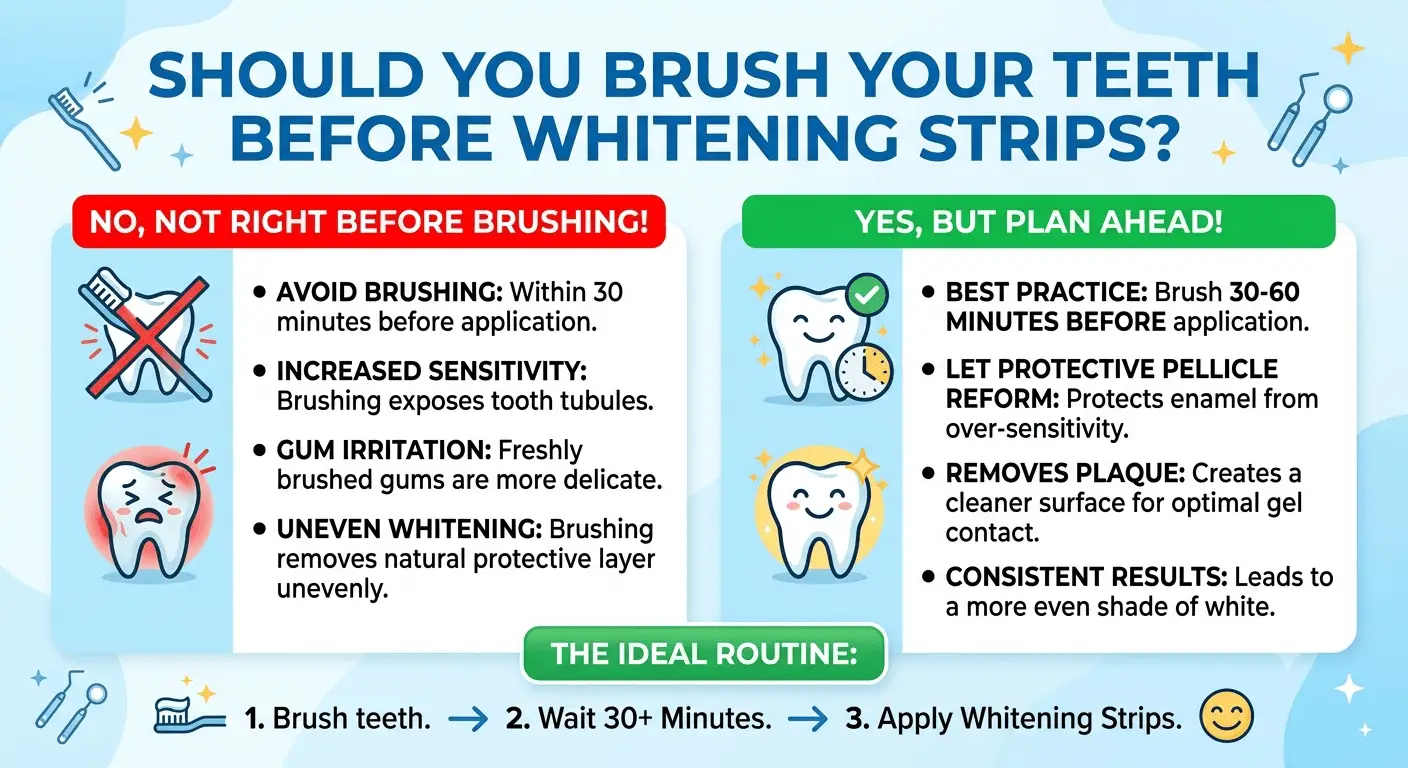
Many individuals look for answers about brushing before they begin their teeth whitening . The short answer is yes, but you should wait about 30 minutes after brushing before you apply the strips.
This simple step can help protect your teeth and gums. It also helps the whitening gel work better. If you use the strips right after brushing, your teeth may feel more sensitive. Your gums may also become irritated.
Whitening strips are a popular way to brighten your smile at home. They are easy to use and often cost less than professional whitening treatments..How Long to Keep Gauze In After Tooth Extraction?
Quick Answer
Should you clean your teeth before you use whitening strips?
Yes. Brush your teeth first. Then wait about 30 minutes before placing the whitening strips on your teeth. It removes leftover food and plaque from your teeth while decreasing the chance .
What Are Whitening Strips?
Whitening strips are thin plastic strips. They have a whitening gel on one side. Many whitening strip products rely on hydrogen peroxide or carbamide peroxide to remove. These ingredients help remove stains from your teeth.
The strips stick to the front of your teeth.Keep the strips in place for the suggested treatment time.
Most products ask you to wear them for 30 to 60 minutes.
Many people use whitening strips to remove stains from:
- Coffee
- Tea
- Red wine
- Soda
- Tobacco
- Colored foods
Whitening strips can make your smile brighter when you use them as directed.
Why Is Brushing Before Applying Whitening Strips Important?
Brushing your teeth removes food, plaque, and bacteria. A clean tooth surface lets the whitening gel touch the enamel more even.
When your teeth are clean, the strips fit better. The gel can spread across the surface without food getting in the way.
Brushing also helps keep your mouth healthy during whitening treatment.
However, brushing too hard or using whitening strips right away can make your teeth feel .
How Whitening Strips Work
Whitening strips use safe bleaching ingredients to break down stains.
The gel moves into the outer layer of the tooth. It breaks apart stain molecules. As the stains become smaller, your teeth look whiter.
This process takes time. Most people need several days or weeks to see the best results.
Results depend on:
- The type of stains
- Your daily habits
- Your oral hygiene
- The whitening product
- How often you use it
Benefits of Brushing Before Whitening Strips
Using whitening strips after brushing can offer many advantages.
Cleaner Teeth
Plaque and trapped food particles can affect the way whitening gel works on your teeth. Clean teeth help the strips work better.
Better Contact
The strips stick more even to clean teeth. Better contact means more even whitening.
Fresher Mouth
A clean mouth feels better during the whitening process.
Better Oral Health
Brushing removes harmful bacteria. Healthy teeth respond better to whitening treatments.
More Even Results
Removing surface debris helps the whitening gel reach all areas of the teeth.
Why You Should Wait After Brushing
Many people think they should brush and apply whitening strips right away.
That is not the best idea.
Brushing can make tiny scratches on the enamel. This is normal. It also makes your teeth more sensitive for a short time.
If you place whitening strips on your teeth immediately after brushing, the whitening. This can cause discomfort.
Waiting about 30 minutes gives your mouth time to recover.
During this time, saliva helps protect your teeth.
What Can Happen If You Skip Brushing Before Whitening Strips?
Skipping brushing does not always ruin the treatment.
However, food and plaque may stay on your teeth.
This can lead to uneven whitening.
Some parts of your teeth may become whiter than others.
Food particles can also stop the gel from touching the enamel.
For the best results, always start with clean teeth.
Step-by-Step Guide
Step 1: Brush Your Teeth
Use a soft toothbrush.
Brush gent for about two minutes.
Use regular fluoride toothpaste.
Do not brush too hard.
Step 2: Wait About 30 Minutes
Give your teeth time to settle.
This small wait may reduce tooth sensitivity.
Step 3: Dry Your Teeth
Use a clean tissue if needed.
Dry teeth help the strips stay in place.
Step 4: Apply the Whitening Strips
Follow the instructions on the package.
Place the strips careful over your teeth.
Press them gent so they stick well.
Step 5: Leave Them On
Wear the strips for the recommended time.
Do not leave them on longer than the instructions say.
Too much whitening does not make teeth whiter faster. It can increase sensitivity.
Can You Brush After Using Whitening Strips?
Yes.
Many dentists suggest waiting a short time before brushing again.
Your teeth may feel sensitive right after treatment.
If you brush immediately, the discomfort may become worse.
Rinsing your mouth with water first is often a good choice.
If you brush later, use a soft toothbrush and gentle pressure.
Who Should Avoid Whitening Strips?
Whitening strips are not right for everyone.
You should talk to a dentist before using them if you have:
- Cavities
- Gum disease
- Loose fillings
- Dental crowns
- Veneers
- Very sensitive teeth
- Broken teeth
Children should only use whitening products if a dentist recommends them.
Common Mistakes
Many people make simple mistakes when whitening their teeth.
Avoid these habits:
- Applying strips right after brushing.
- Wearing strips longer than directed.
- Using strips every day for longer than recommended.
- Eating dark foods during treatment.
- Smoking while whitening.
- Skipping the product instructions.
- Using damaged or expired strips.
Avoiding these mistakes helps you get safer and better results.
Best Practices
Using whitening strips the right way helps you get a brighter smile and lowers the risk of tooth sensit.
Follow these simple tips:
- Brush your teeth before treatment.
- Wait about 30 minutes after brushing.
- Read all package directions.
- Use the strips only as often as recommended.
- Drink plenty of water.
- Avoid coffee, tea, red wine, and dark sodas during treatment.
- Do not smoke while whitening your teeth.
- Keep brushing and flossing every day.
- Stop using the strips if you feel severe pain or notice gum irritation.
- Visit your dentist if sensitivity lasts for several days.
These habits can improve your whitening results and help keep your teeth healthy.
Expert Tips
Dentists often recommend a few extra steps to make whitening safer and more effectiv.
- Use a soft-bristled toothbrush.
- Choose a fluoride toothpaste to protect your enamel.
- Avoid acidic foods before and after whitening.
- Stay hydrated to support healthy saliva.
- Follow the full treatment schedule instead of using extra strips.
- Always keep whitening strips in a dry and temperature-controlled area.
- Keep regular dental checkups to maintain good oral health.
Healthy teeth respond better to whitening treatments.
Whitening Strips vs. Professional Whitening
| Feature | Whitening Strips | Professional Whitening |
|---|---|---|
| Cost | Lower | Higher |
| Convenience | Use at home | Visit a dental clinic |
| Whitening Speed | Gradual | Faster |
| Strength | Mild to moderate | Stronger |
| Supervision | Self-use | Dentist supervised |
| Best For | Mild stains | Deep stains |
If you have heavy staining or sensitive teeth, ask your dentist which option is best for you.
FrequentlyAsked Questions
Should I brush my teeth before using whitening strips?
Yes. Brush your teeth first, then wait about 30 minutes before applying the strips.
Can I use whitening strips every day?
Only follow the schedule listed on the product label. Using them too often may increase sensitivity.
Can whitening strips damage enamel?
When used correct, most approved whitening strips are safe for enamel.
What if my teeth become sensitive?
Take a short break from whitening and use toothpaste made for sensitive teeth.
Can I eat after using whitening strips?
Yes. Wait for a little while after treatment and choose foods with lighter colors. Avoid coffee, tea, and other dark drinks for several hours.
Do whitening strips work on crowns or fillings?
No. Whitening strips cannot lighten the color of crowns, veneers, or dental fillings.
How long do whitening results last?
Results often last several months. Good oral hygiene and avoiding stain-causing foods help maintain a bright smile.
Can teenagers use whitening strips?
Young people should ask a dentist before using any whitening product.
Should I floss before whitening?
Yes. Flossing removes food between your teeth and helps keep your mouth clean.
When should I see a dentist?
Visit a dentist if you have cavities, gum disease, severe sensitivity, or if whitening does .
Conclusion
So, should you clean your teeth before you put on whitening strips?Yes. Brushing first helps remove plaque, food, and bacteria. However, you should wait about 30 minutes before applying the strips. This simple step helps lower tooth sensitivity and allows the whitening gel to work .
Always follow the instructions that come with your whitening strips. Avoid leaving them on longer than recommended, and keep up with daily brushing . Healthy teeth respond better to whitening treatments and stay brighter for longer.
If you have sensitive teeth, gum problems, fillings, cowns, or other dental concerns, talk to you. Professional advice can help you choose the safest and most effective option.
A bright smile starts with good oral hygiene. By brushing correct, waiting before applying whitening strips, and using the product .