How Much Does a Fire Hydrant Weigh? Engineering Design Technology Explained
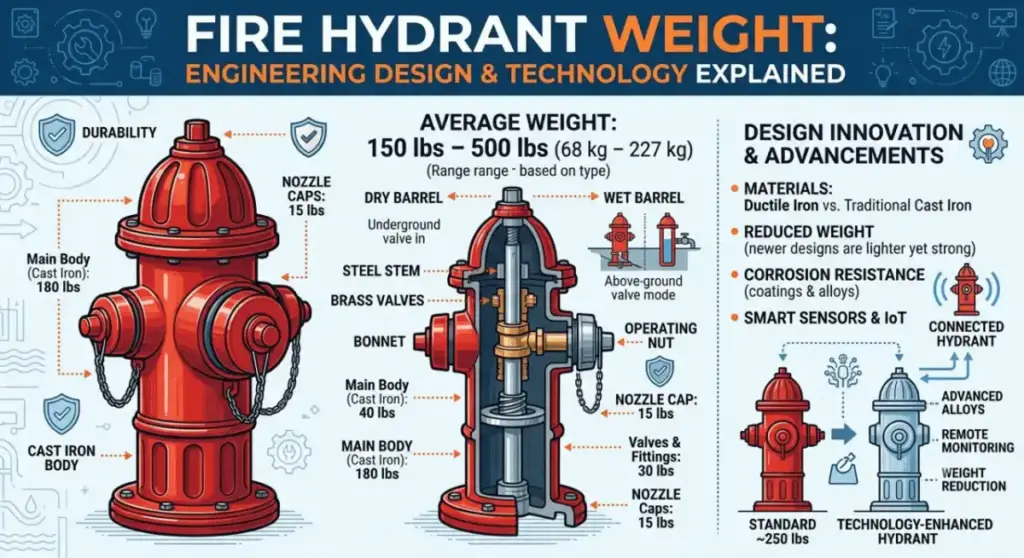
A modern fire hydrant combines durable engineering, water management technology, and smart infrastructure solutions for emergency response.
How Much Does a Fire Hydrant Weigh?
You see fire hydrants on almost every street. Have you ever wondered how much a fire hydrant weighs? Most weigh between 300 and 500 pounds. Some big industrial ones weigh over 1,000 pounds.How Much Does 100 Gallons of Diesel Weigh?
The weight is not random. Engineers plan every pound. A hydrant must handle strong water pressure, harsh weather, and car bumps. Good design keeps people safe.
Quick Answer
Most standard fire hydrants weigh 300 to 500 pounds (136 to 227 kg).
| Hydrant Type | Average Weight |
|---|---|
| Small hydrant | 250–350 lbs |
| Standard hydrant | 300–500 lbs |
| Dry barrel hydrant | 400–700 lbs |
| Industrial hydrant | 700–1,000+ lbs |
| Smart hydrant | 350–700 lbs |
Size, material, and design change the exact weight.
What Is a Fire Hydrant?
A fire hydrant is a water connection point on the street. Firefighters hook their hoses to it. It gives them fast access to the city’s water supply.
A hydrant has several parts:
- Main valve
- Operating nut
- Bonnet (the top cap)
- Nozzles (the outlets)
- Barrel (the main body)
- Drain system
- Base connection
Each part adds weight and strength.
Why Fire Hydrant Weight Matters
Weight is more than a number. It does real work.
It keeps the hydrant steady. A heavy hydrant stays firmly in place when water rushes through it.
It handles pressure. City water pipes run under high pressure. Strong, thick metal takes that force safely.
It survives bumps. Hydrants stand near roads. Their sturdy build helps them survive small crashes.
It lasts a long time. Many hydrants serve for 40 to 60 years.
It works every time. Firefighters must trust a hydrant during an emergency.
What Decides a Hydrant’s Weight?
Makers do not just add extra metal. They balance strength, safety, and cost.
Material. Some metals are heavier than others.
Strength needs. A hydrant must handle:
- Water pressure inside
- Hot and cold weather
- Moving ground
- Road shaking
- Rain, snow, and sun
Safety margins. Engineers build in extra strength on purpose.
Rules and tests. Every hydrant must pass strict industry standards.
Materials Used in Fire Hydrants
Ductile Iron
Most new hydrants use ductile iron. It is a tough type of iron that bends before it breaks.
It offers:
- High strength
- Long life
- Strong impact resistance
Cast Iron
Many older hydrants use cast iron. It is strong and has worked well for many years.
Stainless Steel
Makers use stainless steel for inside parts. It resists rust, needs less repair, and works reliably.
Protective Coatings
Special paint and coatings shield hydrants from:
- Rust
- Water damage
- Chemicals
- Bad weather
How Engineers Design Hydrants
Engineers use smart tools to build better hydrants.
Computer design (CAD). Engineers draw exact 3D models on a computer. This makes designs more precise and faster to improve.
Stress testing on screen. Special software shows where a hydrant might crack or bend. Engineers fix weak spots before they build anything.
Pressure testing. Factories test each hydrant under high pressure. They check for leaks, strong valves, and a solid body.
Precise machines. Modern factory machines make every hydrant the same high quality.
Dry Barrel vs. Wet Barrel Hydrants
Dry Barrel Hydrants
Cold places use dry barrel hydrants. The water stays deep underground, below the frost line. Firefighters let the water up only when they open the valve. This stops the water from freezing.
Typical weight: 400 to 700 pounds.
Wet Barrel Hydrants
Warm places use wet barrel hydrants. Water fills the hydrant all the time. It works well where the weather never freezes.
Typical weight: 300 to 500 pounds.
Side-by-Side Comparison
| Feature | Dry Barrel | Wet Barrel |
|---|---|---|
| Cold weather use | Excellent | Limited |
| Weight | Higher | Lower |
| Design | More complex | Simpler |
| Upkeep | Moderate | Easy |
Hydrants and the City Water System
Hydrants are a key part of city life. They connect straight to:
- Water pipes
- Underground water lines
- City water control systems
- Emergency services
- Public safety networks
Without hydrants, firefighters would struggle to find water. So cities plan hydrant spots with great care. They want every home and shop to be close to one.
Smart Fire Hydrants
Technology now improves even old street equipment.
What Is a Smart Hydrant?
A smart hydrant has built-in sensors. It sends live data about its own health. City workers can check it from a computer.
What Smart Hydrants Can Do
- Track water pressure
- Measure water flow
- Spot leaks
- Show their location by GPS
- Run checks from far away
- Send alerts when they need repair
Why Cities Like Them
- Repairs happen faster.
- Repair costs go down.
- Workers see problems sooner.
- Firefighters get better water support.
How a Fire Hydrant Works
- Water connection. The hydrant links to a water pipe underground.
- Opening the valve. A firefighter turns the operating nut.
- Water control. Inner valves guide the water flow.
- Hose hookup. The firefighter attaches a hose to an outlet.
- Water supply. Water flows fast to the fire.
Benefits of Strong, Heavy-Duty Hydrants
- Longer life. Tough builds last for decades.
- More safety. Strong metal lowers the chance of failure.
- Steady water flow. Good design keeps water moving well.
- Fewer repairs. Durable parts break less often.
- Better protection. Reliable hydrants help save lives and homes.
Common Mistakes People Make
Thinking all hydrants weigh the same. Weights vary a lot.
Ignoring the material. Iron type changes the weight.
Forgetting the extras. Smart hydrants carry more parts.
Judging by looks. The inside design matters more than the paint.
Best Practices for Hydrant Care
- Inspect hydrants often.
- Test the water flow.
- Check for rust.
- Renew worn coatings.
- Fix damaged parts quickly.
- Use digital monitoring when you can.
Real-World Example
A growing city had old hydrants. Engineers replaced them with new ductile iron models. They added sensors to each one.
The results were clear:
- Better pressure tracking
- Faster repairs
- Stronger emergency readiness
- Fewer breakdowns
The new hydrants weighed a little more than the old ones. But they worked much better.
Quick Facts
- A standard hydrant weighs about 300 to 500 pounds.
- Dry barrel hydrants often weigh over 400 pounds.
- Large industrial hydrants can top 1,000 pounds.
- Many hydrants work for more than 50 years.
What Is Next for Hydrants?
- Connected devices. More hydrants will link to city networks.
- Smarter software. Programs will study hydrant data and spot patterns.
- Early warnings. Software will flag problems before a hydrant fails.
- Virtual copies. Cities will build computer models of hydrants to test them.
- Better materials. Future hydrants may be lighter yet stronger.
- Smart cities. Hydrants will join larger city systems.
Frequently Asked Questions
How heavy is a standard fire hydrant?
Most weigh between 300 and 500 pounds.
Why are fire hydrants so heavy?
Makers use strong metals like ductile iron. This adds safety and long life.
What is the heaviest type of hydrant?
Industrial hydrants can weigh over 1,000 pounds.
Do smart hydrants weigh more?
Yes, a little. Sensors and other parts add weight.
What material do modern hydrants use?
Most use ductile iron with coatings that stop rust.
Why does hydrant weight matter?
Weight affects strength, stability, and lifespan.
How long does a fire hydrant last?
Many last for several decades.
What is a smart hydrant?
It is a hydrant with sensors that send live data about its condition.
Can one person move a fire hydrant?
No. Workers need lifting equipment.
How do engineers design hydrants?
They use computer models, stress tests, pressure tests, and material checks.
Conclusion
So, how much does a fire hydrant weigh? Most standard hydrants weigh 300 to 500 pounds. But the weight tells only part of the story. Smart design, strong metal, and careful testing make a hydrant safe and reliable.
As cities grow, hydrants will keep getting smarter. They will keep protecting our streets, homes, and families.