Can a Bad Valve Cover Gasket Cause Loss of Power? Engine Problems Explained
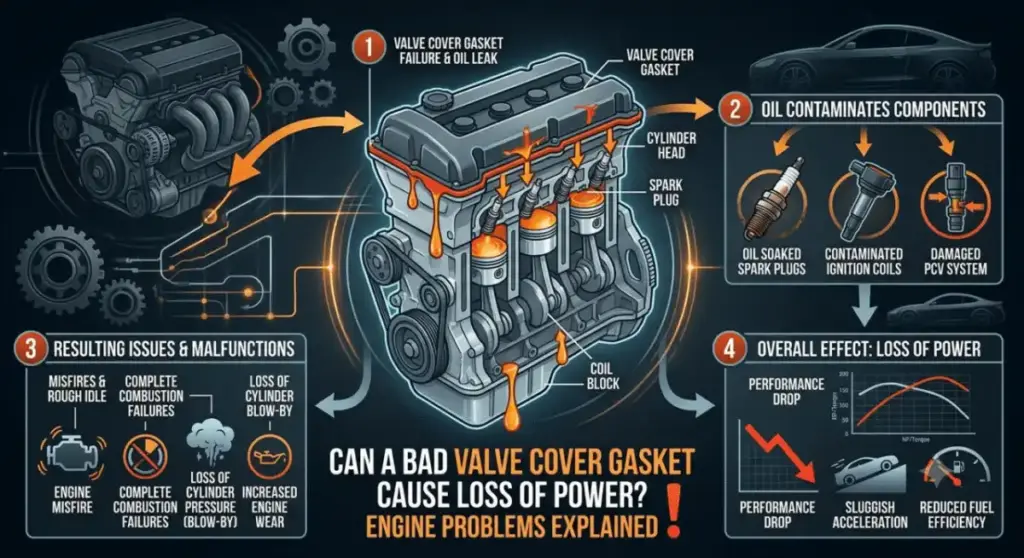
A damaged valve cover gasket can cause oil leaks that affect spark plugs, ignition parts, and overall engine performance.
Introduction Can a Bad Valve Cover Gasket
A car engine needs every part to work correct. Small problems can slow affect engine performance. A bad valve cover gasket is one common issue that can create engine problems.
Drivers often want to know if a faulty valve cover gasket can make an engine lose power.
The short answer is yes, it can cause power loss in some cases. A damaged valve cover gasket usually does not direct reduce engine power. However, it may trigger other issues that can reduce engine performance.
A leaking gasket can allow oil to escape from the engine. Oil leaks can damage spark plugs, ignition parts, and other engine systems. These problems can cause rough running, misfires, and reduced power.
Modern vehicles use advanced engine technology. Sensors, computers, and electronic systems help control engine performance. A small mechanical issue can affect these systems and reduce efficiency.Whining Noise in Car.
This guide explains how a bad valve cover gasket affects engine power, the warning signs, repair i
What Is a Valve Cover Gasket?
A valve cover gasket is a sealing part located between the valve cover and the top section of an engine.
The valve cover protects important engine parts. These parts include:
- Camshafts
- Valves
- Rocker arms
- Other moving engine components
The gasket creates a tight seal. It helps seal the engine proper by keeping oil contained and stopping leaks.
With time, constant heat and engine pressure can weaken the gasket and cause damage.
The material may become hard, cracked, or weak. When this happens, oil can leak from the engine.
Simple Definition
A valve cover gasket is a seal that prevents engine oil from leaking from the top of the engine.
Can a Bad Valve Cover Gasket Cause Loss of Power?
Yes, a bad valve cover gasket can contribute to loss of power, but it usually happens indirect.
The gasket itself does not control engine power. However, an oil leak from a damaged gasket can create problems that reduce performanc.
For example:
- Oil leaks into spark plug areas.
- Spark plugs become dirty or damaged.
- The ignition system works poor.
- The engine may misfire.
- The vehicle loses power.
A modern engine depends on many connected systems. When one part fails, other systems may also suffer.
The Effect of a Damaged Valve Cover Gasket on Engine Function
1. Oil Can Damage Spark Plugs
Many modern engines place spark plugs near the valve cover area.
A leaking gasket can allow oil to enter the spark plug wells.
Oil contamination can cause:
- Weak spark
- Engine misfires
- Poor acceleration
- Rough idle
- Reduced power
Spark plugs need a clean environment to create a strong spark. Oil buildup can reduce their ability to ignite the air-fuel mixture.
2. It Can Cause Engine Misfires
An engine misfire happens when one or more cylinders do not burn fuel correct.
A bad valve cover gasket can lead to misfires when oil reaches ignition parts.
Common signs include:
- Shaking engine
- Slow acceleration
- Check engine light
- Lower fuel economy
The vehicle computer, also called the Engine Control Unit (ECU), may detect these problems i.
3. Oil Loss Can Affect Engine Operation
A damaged gasket can cause continuous oil leaks.
Low engine oil levels can create problems such as:
- Increased friction
- Poor lubrication
- Higher engine temperature
- Faster wear of engine parts
Engine oil helps moving parts work smooth. Without enough oil, the engine cannot perform at its best.
Why This Problem Matters in Modern Automotive Technology
Today’s vehicles use advanced technology to improve power, fuel economy, and emissions.
Important systems include:
- Engine Control Unit (ECU)
- Oxygen sensors
- Fuel injection systems
- Ignition control modules
- Vehicle diagnostic systems
These systems depend on accurate engine operation.
A small oil leak can affect different components. The ECU may detect unusual engine behavior and adjust performance.
This shows how mechanical parts and digital technology work together in modern vehicles.
How a Valve Cover Gasket Works
The valve cover gasket follows a simple process:
Step 1: The Engine Creates Pressure
During operation, the engine creates heat and pressure.
Step 2: Oil Moves Through Engine Parts
Engine oil travels through different areas to protect moving components.
Step 3: The Gasket Creates a Seal
The valve cover gasket keeps oil inside the engine.
Step 4: A Damaged Gasket Allows Leakage
When the gasket fails, oil can escape.
Step 5: Other Engine Systems May Become Affected
Oil leaks can damage ignition parts and reduce engine performance.
Common Symptoms of a Bad Valve Cover Gasket
A damaged valve cover gasket may show several warning signs.
Oil Leak Around the Engine
The most common sign is oil around the valve cover area.
You may notice:
- Oil spots under the car
- Wet areas near the engine
- Burning oil smell
Burning Oil Smell
Leaking oil can fall onto hot engine parts.
This can create:
- Smoke
- Burning smell
- Possible engine concerns
Engine Misfire
Oil near spark plugs can affect ignition.
Signs include:
- Engine shaking
- Poor acceleration
- Power loss
Check Engine Light
Modern vehicles use sensors to check engine performance.
A problem may trigger the check engine warning.
A diagnostic scanner can help identify the issue.
Low Engine Oil Level
A serious leak can reduce oil levels.
Drivers should check oil regular to protect engine health.
Main Causes of Valve Cover Gasket Failure
Several factors can damage a valve cover gasket.
Age and Wear
Most gaskets lose flexibility over time.
Heat cycles make the material harder and weaker.
High Engine Temperature
Excessive heat can damage sealing materials.
Poor Maintenance
Skipping oil changes can increase engine stress.
Clean oil helps protect engine components.
Incorrect Installation
A gasket installed incorrect may leak early.
Proper fitting is important for long-term performance.
Step-by-Step Guide
Finding a bad valve cover gasket early can save money and protect the engine. Modern vehicles use computer systems and sensors to detect engine problems. However, a basic inspection can also help identify issues.
Step 1: Check for Oil Leaks
Look around the top area of the engine.
Common signs include:
- Oil around the valve cover
- Wet engine surfaces
- Oil smell after driving
- Smoke from the engine area
A clean engine makes leaks easier to find.
Step 2: Inspect Spark Plug Areas
Oil near spark plugs can create ignition problems.
Check for:
- Oil inside spark plug wells
- Damaged ignition coils
- Engine misfires
If oil reaches these parts, the engine may lose power.
Step 3: Use a Diagnostic Scanner
Modern cars have an onboard computer system.
A diagnostic scanner can check:
- Engine error codes
- Misfire problems
- Sensor issues
- Performance warnings
The scanner helps technicians find the exact problem faster.
Common Mistakes
Ignoring Small Oil Leaks
Many drivers ignore small leaks because the car still runs.
A small leak can become a bigger engine problem over time.
Replacing Parts Without Diagnosis
Some people replace spark plugs or sensors without checking the real cause.
A proper inspection helps avoid unnecessary repairs.
Using Low-Quality Gaskets
Cheap gaskets may fail quick.
A quality valve cover gasket provides better sealing and longer life.
Best Practices
Follow these simple maintenance tips:
- Change engine oil on time.
- Use the correct oil type.
- Check oil levels regular.
- Inspect leaks early.
- Follow vehicle service schedules.
Regular maintenance helps improve engine life and performance.
Expert Tips
Modern automotive technology makes engine care easier.
Experts recommend:
- Use an OBD-II scanner for warning checks.
- Watch for unusual engine sounds.
- Fix oil leaks quick.
- Keep ignition parts clean.
- Follow manufacturer guidelines.
Early repairs can prevent expensive engine damage.
Example
Imagine a vehicle with a damaged valve cover gasket.
At first, the driver notices a small oil smell. After some time, oil reaches the spark plug area.
The spark plugs stop working correct.
The engine starts to misfire.
The car feels weak during acceleration.
The driver may notice:
- Slow pickup
- Rough engine operation
- Lower fuel efficiency
A simple gasket problem can slow affect vehicle performance.
Valve Cover Gasket Problem vs Other Power Loss Causes
| Problem | Can Cause Power Loss? | Main Reason |
|---|---|---|
| Bad valve cover gasket | Yes | Oil leaks can damage ignition parts |
| Dirty air filter | Yes | Reduces airflow |
| Weak fuel pump | Yes | Limits fuel supply |
| Bad spark plugs | Yes | Creates weak combustion |
| Faulty sensors | Yes | Affects engine control |
A valve cover gasket is only one possible reason for power loss. Accurate testing helps find the actual source of the problem.
Automotive Technology Tools for Diagnosis
Modern repair shops use advanced tools, including:
OBD-II Scanner
This tool reads engine error codes from the vehicle computer.
Digital Inspection Cameras
Technicians use cameras to inspect hard-to-reach engine areas.
Engine Monitoring Software
Modern software tracks:
- Engine temperature
- Fuel usage
- Sensor data
- Performance issues
These tools improve repair accuracy.
Future Trends
Automotive technology continues to improve.
Future vehicles will use smarter systems, including:
- Artificial intelligence diagnostics
- Predictive maintenance
- Advanced vehicle sensors
- Real-time engine monitoring
Future cars may detect gasket leaks and engine problems before serious damage happens.
Smart technology will help drivers save money and improve vehicle safety.
FrequentlyAsked Questions
Can a bad valve cover gasket direct reduce engine power?
No, a valve cover gasket does not direct control engine power. However, oil leaks from a damaged gasket can create problems that reduce performance.
How do I know if my valve cover gasket is damage or leaking?
Common signs include oil leaks, burning oil smell, engine misfires, and oil around the valve i.
Can a faulty valve cover gasket leak cause the engine to misfire?
Yes. Oil can reach spark plugs and ignition coils, which may cause engine misfires.
How long can I drive with a faulty valve cover gasket?
You can drive for a short time, but you should repair it quick. Long-term leaks can damage engine parts.
Does a valve cover gasket affect fuel economy?
Yes, indirect. Engine misfires and poor performance can reduce fuel efficiency.
Conclusion
A damaged valve cover gasket can reduce engine power indirect by causing .
The gasket itself only seals the valve cover and prevents oil leaks. However, a damaged gasket can allow oil to reach important engine parts.
Oil leaks can affect spark plugs, ignition coils, and engine performance systems. These issues can cause misfires, slow acceleration, and reduced power.
Modern automotive technology helps detect these problems faster. Diagnostic scanners, engine sensors, and computer systems make it easier to find performance.