Raccoon Repellent Vinegar Does Vinegar ReallyKeep Raccoons Away?
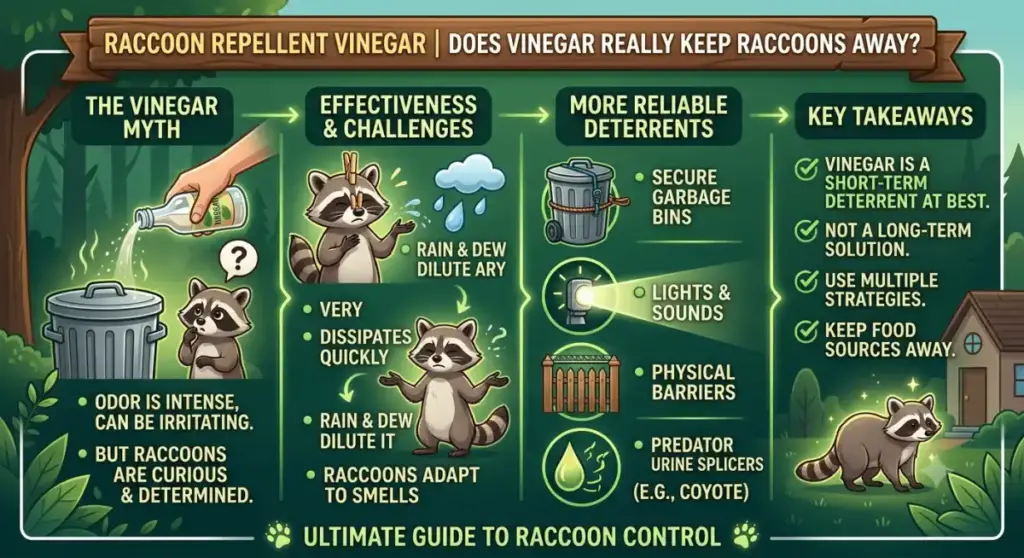
Vinegar spray can help discourage raccoons by creating a strong smell around protected areas.
Introduction Raccoon Repellent Vinegar
Raccoons showed up in my trash three nights in a row last spring. Torn bags, food scattered across the driveway, the whole mess. So I did what a lot of people do and grabbed the vinegar bottle.
Here’s what I learned after actually testing it, plus what I wish I’d known before I started.What Is a Riser Desk?
What Is Raccoon Repellent Vinegar, Really?
It’s just white vinegar, usually mixed with water and sprayed around the spots raccoons keep visiting. Nothing fancy about it.
The idea is simple. Raccoons have a strong sense of smell, and vinegar has a sharp, sour smell they don’t love. Spray it around, and the area gets a little less inviting.
People spray it near:
- Trash cans
- Garden beds
- Porches
- Sheds and storage bins
- Fence lines
- Any spot raccoons keep sneaking into
It won’t hurt them. It just makes the air smell bad enough that they’d rather check out the yard next door.
So Does It Actually Work?
Sort of. Vinegar can help, but don’t expect miracles.
Raccoons are smart, and they’re motivated by food. A little vinegar smell isn’t going to outweigh an unlocked trash can full of leftovers. If there’s an easy meal nearby, most raccoons will push past the smell to get it.
Where vinegar actually earns its keep is as a mild nudge. It works best on raccoons that are just passing through or testing out a new spot, not ones that have already found a reliable food source.
Why Bother With a Home Remedy At All?
Because raccoons cause real headaches. Once they decide your yard is worth visiting, you’ll probably deal with:
- Trash bags ripped open and scattered
- Plants dug up or flattened
- Pet food that disappears overnight
- Knocked-over bins and containers
- A general mess every single morning
Vinegar gives you a cheap, low-effort first move before you spend money on anything more serious. It’s not a fix-all, but it’s a reasonable place to start.
How Vinegar Actually Repels Raccoons
Raccoons explore the world nose-first. Smell is how they find food, avoid danger, and figure out if a spot is worth returning to.
Here’s roughly what happens when you spray vinegar around:
- The vinegar releases a strong, sharp odor.
- That smell spreads through the immediate area.
- Raccoons pick up on it and often hesitate or turn away.
- The spot becomes less appealing, at least for a while.
The catch is that smell fades. Rain washes it out. Wind carries it off. Sun bakes it away. You’re not setting a permanent boundary, you’re setting a temporary one that needs upkeep.
The Real Benefits of Using Vinegar
It Costs Almost Nothing
Most kitchens already have a bottle of white vinegar sitting in a cabinet. You don’t need to buy a single new product to try this.
It Takes Two Minutes to Set Up
Grab a spray bottle, mix vinegar with water, and you’re done. No special skills, no tools, no waiting around for anything to ship.
It’s a Natural Option
If chemical repellents make you nervous around kids, pets, or garden vegetables, vinegar is a much simpler alternative.
It Doesn’t Hurt the Raccoons
This isn’t about trapping or harming anything. It just makes an area smell less appealing so raccoons choose to go somewhere else.
It Handles Small, Occasional Visits Well
If you’re dealing with an occasional raccoon rather than a full-blown infestation, vinegar paired with a few other habits can genuinely help.
Other Ways People Keep Raccoons Away
Vinegar isn’t the only trick out there. A few other options worth knowing about:
Strong-smelling spices. Some people sprinkle cayenne pepper, chili powder, or crushed garlic near problem areas. Same idea as vinegar, just a different smell raccoons tend to avoid.
Motion-activated devices. Sprinklers, lights, or noise-makers that trigger when something moves nearby. These startle raccoons and tend to work better than smell alone.
Physical barriers. Locking trash lids, sturdy garden fencing, and sealed storage bins. This is the option that actually blocks access instead of just discouraging it.
How to Make a Vinegar Spray That Won’t Waste Your Time
Step 1: Grab White Vinegar
Regular white vinegar from the grocery store works fine. You don’t need anything fancier or more expensive.
Step 2: Mix It With Water
A basic ratio is one part vinegar to one part water. Pour it into a spray bottle and give it a shake.
Step 3: Spray the Problem Spots
Target the areas raccoons actually use, like trash cans, garden edges, porch corners, and anywhere they seem to be getting in. Skip spraying it directly on any animal you see, just treat the space around it.
Step 4: Reapply Often
Rain and wind will wipe out the smell fast. Check the area every few days, and definitely reapply after a storm.
Mistakes People Make With Vinegar
Expecting it to solve everything. Vinegar discourages, it doesn’t remove. If raccoons are determined, they’ll push through the smell eventually.
Leaving food sources out. Vinegar won’t matter much if there’s an open bag of trash or pet food sitting nearby. Clean those up first.
Spraying way too much. A strong vinegar smell can bother you, your neighbors, and even your plants if you overdo it. A light, targeted spray is enough.
Skipping trash protection. No amount of vinegar beats an easy meal. Lock the lids down or the spray is basically pointless.
Habits That Actually Make a Difference
- Keep trash can lids locked or latched
- Bring pet food inside at night
- Clean up fallen fruit and food scraps quickly
- Seal off small gaps raccoons could squeeze through
- Keep garden beds tidy and less inviting
- Don’t rely on just one method, stack a few together
A Couple of Real Examples
The garden situation. A neighbor of mine kept finding her tomato plants dug up every week. She sprayed vinegar around the garden border and added a low fence. The combination cut the visits down noticeably within a couple weeks.
The trash can situation. Another friend dealt with garbage scattered across her driveway almost every morning. Once she switched to a locking bin and added vinegar spray nearby, the mess mostly stopped.
Vinegar vs Other Raccoon Control Methods
| Method | Best For | Why People Like It | Where It Falls Short |
|---|---|---|---|
| Vinegar spray | Occasional visits | Cheap, quick to try | Fades fast, needs reapplying |
| Motion sprinklers | Yards and gardens | Startles animals effectively | Costs more upfront |
| Locking trash cans | Stopping food access | Long-term, low maintenance | Needs a bit of setup |
| Fencing | Garden protection | Physical, reliable barrier | Takes time to install |
| Wildlife control service | Serious, repeat problems | Handled by a pro | Highest cost |
Quick Answers to Common Questions
Does vinegar actually repel raccoons? It can help. Raccoons dislike the smell, but it only works as a short-term deterrent, not a permanent solution.
What kind of vinegar should I use? Plain white vinegar. It has the strongest, most consistent smell for this purpose.
How long does the effect last? Not long. Weather plays a big role, and rain or wind can clear the smell out within a day or two.
Will vinegar get rid of raccoons for good? No. It discourages visits, but it won’t remove raccoons from the area permanently.
Is vinegar safe to use around pets? Generally yes in small amounts, but keep pets from drinking the mixture directly.
Can I spray it directly on a raccoon? Don’t. Spray the area around them, never the animal itself.
What other smells do raccoons avoid? Vinegar, strong spices like cayenne or garlic, and most commercial repellent sprays.
Will vinegar stop raccoons from getting into my trash? Not on its own. A locking lid does far more than any spray ever will.
How often should I spray it? Every few days, and always after it rains.
What’s the best overall approach? Combine vinegar with clean outdoor spaces, secured trash, and some kind of physical barrier. No single method carries the full weight on its own.
The Bottom Line
Vinegar isn’t magic, but it’s not useless either. It’s a cheap, safe first step that can genuinely cut down on casual raccoon visits, especially when you pair it with locked trash cans and a cleaner yard.
Just don’t expect one spray bottle to solve a real infestation. If raccoons keep coming back no matter what you try, it’s worth calling a local wildlife control service instead of fighting it alone.
Quick recap:
- Vinegar can discourage raccoons through smell, not harm
- White vinegar works best for this
- The effect wears off fast, especially after rain
- It works better paired with locked trash and garden barriers
- Persistent problems usually need