Reverse Health App Complete Guide for Better Health and Weight Loss
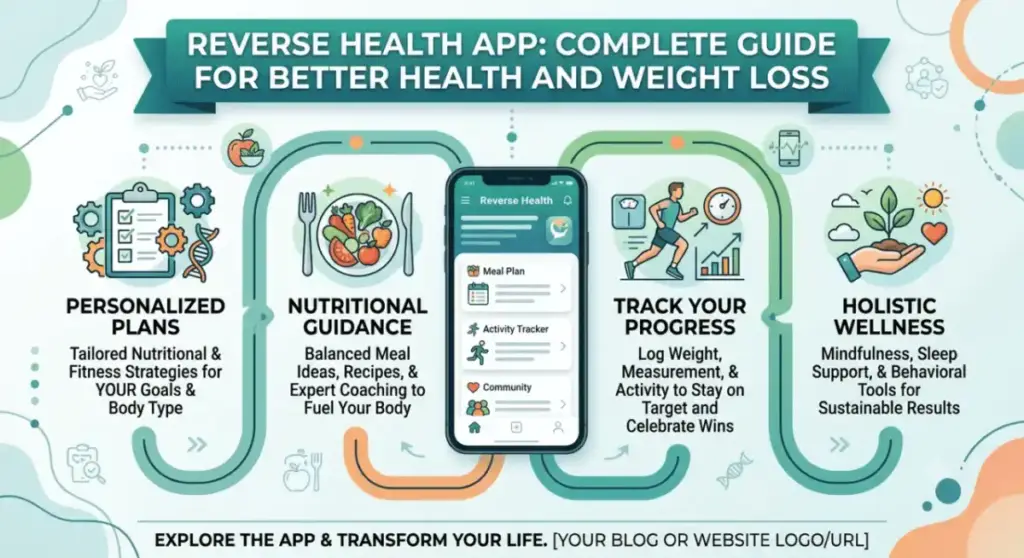
Reverse Health helps users follow personalized fitness routines, nutrition plans, and healthy lifestyle goals.
Introduction
Losing weight after 40 hits different. Your metabolism slows down, sleep gets weird, and the diets that worked at 25 just stop working. That’s the exact gap the Reverse Health app is trying to fill.
I dug into what this app actually does, who it’s built for, and whether it’s worth your money. Here’s the honest breakdown.Reverse Health App
What Is the Reverse Health App?
Reverse Health is a wellness app built mainly for women over 40. It combines meal planning, home workouts, and habit tracking into one program based on your answers to a health quiz.
You don’t get a generic diet plan. You answer questions about your age, weight, goals, and lifestyle, and the app builds a plan around that. It’s less “here’s a spreadsheet” and more “here’s what actually fits your life.”
The app leans hard into hormonal changes and aging, which is where a lot of general fitness apps fall short. Perimenopause and menopause mess with weight, energy, and mood, and most workout apps just ignore that entirely.
Who Should Actually Use This App
If you’re a woman in your 40s or 50s dealing with stubborn weight gain, low energy, or frustration with diets that used to work, this app was built with you in mind.
It also works well for beginners. You don’t need gym experience or fancy equipment. Most of the workouts can be done at home with just your bodyweight or a couple of light dumbbells.
If you’re already deep into serious strength training or you’re chasing a specific athletic goal, you might find it too basic. It’s designed for sustainable, everyday health, not performance training.
How It Works, Step by Step
Getting started takes maybe ten minutes.
First, you sign up and take a quiz. It asks about your age, current weight, activity level, food preferences, and what you’re trying to achieve.
Then you get a personalized plan. This includes meal suggestions, a workout schedule, and daily wellness tips based on your answers.
Next, you start tracking. You log your weight, workouts, and habits inside the app so you can see what’s actually working.
Finally, the plan adjusts. As you make progress, the recommendations shift to match where you are now, not where you started.
It’s a loop, not a one-time setup. That’s honestly one of the better things about it.
What You Actually Get With the App
Meal Plans That Don’t Feel Punishing
The nutrition side focuses on realistic, calorie-aware eating rather than strict restriction. You get meal ideas that fit your goals without cutting out entire food groups.
Home Workouts You Can Actually Finish
Most routines take 20 to 30 minutes and need little to no equipment. That matters if you’ve got a job, kids, or just don’t want to drive to a gym.
Progress Tracking That Keeps You Honest
You can log weight, workouts, and habits over time. Seeing the trend line, not just one bad day, helps a lot with motivation.
Daily Nudges and Reminders
The app sends prompts to keep you on track, which sounds small but genuinely helps on the days you’d rather skip everything.
Health Content Worth Reading
There’s a library of articles on nutrition, aging, and fitness basics if you want to understand the “why” behind the plan.
The Real Benefits (And What’s Overhyped)
The biggest win is structure. A lot of people don’t fail at weight loss because they lack willpower. They fail because they’re guessing every day, and guessing gets exhausting fast. This app removes that guesswork.
It also does a genuinely good job addressing midlife changes instead of pretending everyone’s body works the same at 25 and 45.
That said, it’s not magic. You still have to show up, cook the meals, and do the workouts. No app does that part for you, and any review that implies otherwise isn’t being straight with you.
Common Mistakes People Make With It
Skipping meals to “save calories.” This usually backfires. Your energy tanks and you end up overeating later.
Doing the workouts but ignoring the meal plan (or vice versa). The app works best when you use both sides together.
Expecting fast results. Real, lasting changes take weeks, not days. If you’re chasing a quick fix, you’ll be disappointed.
Not logging progress. Skipping the tracking makes it way harder to see what’s working and stay motivated.
Reverse Health vs. Traditional Fitness Programs
| Feature | Reverse Health App | Traditional Program |
|---|---|---|
| Personalized plans | Yes | Sometimes |
| Works from your phone | Yes | Rarely |
| Progress tracking | Built in | Usually manual |
| Meal planning included | Yes | Varies |
| Home workouts | Yes | Not always |
| Cost | Lower than in-person coaching | Often higher |
The main trade-off: you lose the face-to-face accountability of a personal trainer, but you gain flexibility and a much lower price tag.
Is It Worth the Money?
If you want real structure around eating and moving without hiring a coach, yes, it’s worth trying. It’s cheaper than most in-person programs and flexible enough to fit around a busy schedule.
If you already have a solid routine that works for you, you probably don’t need it. And if you’re managing a medical condition, talk to your doctor before starting any new program, app or not.
Quick Answers to Common Questions
Is the Reverse Health app legit?
Yes. It’s a real wellness platform with actual meal plans, workouts, and coaching content, not just a glorified calculator.
Who is it designed for?
Mainly women over 40, especially those dealing with perimenopause or menopause-related weight changes.
Do I need gym equipment?
No. Most workouts use just your bodyweight or light dumbbells you can keep at home.
Can beginners use it?
Yes. The plans are built to be beginner-friendly from day one.
Does it replace medical advice?
No. It’s a wellness tool, not a substitute for talking to your doctor about health concerns.
How fast will I see results?
Most people notice changes in energy and habits within a few weeks. Weight loss results vary and depend on consistency.
Bottom Line
The Reverse Health app isn’t going to do the work for you, but it takes away the guesswork that trips up a lot of people trying to get healthy after 40. If you follow the meal plans, show up for the workouts, and actually track your progress, it gives you a realistic shot at building habits that stick.